Are your ankle boots making your legs look shorter when you wear them with trousers or dresses? The boot is rarely the real problem. The break of the hem, the height of the shaft, the width of the trouser, and the strip of visible leg decide if the outfit looks long and clean or chopped into awkward blocks.
I have found that ankle boots work best when one line stays clear. A slim boot should sit under a narrow trouser. A heavier boot needs either a straight leg with enough room or a dress with enough movement to balance it. The rules are simple once you stop treating every ankle boot as the same shoe.
The trouser rules I actually use
Start with the hem, not the boot
- For slim trousers: stop the hem at the top of the boot or leave a narrow 1 to 2 cm gap. A long, loose hem over a slim ankle boot creates folds that hide the shoe and make the ankle look heavy.
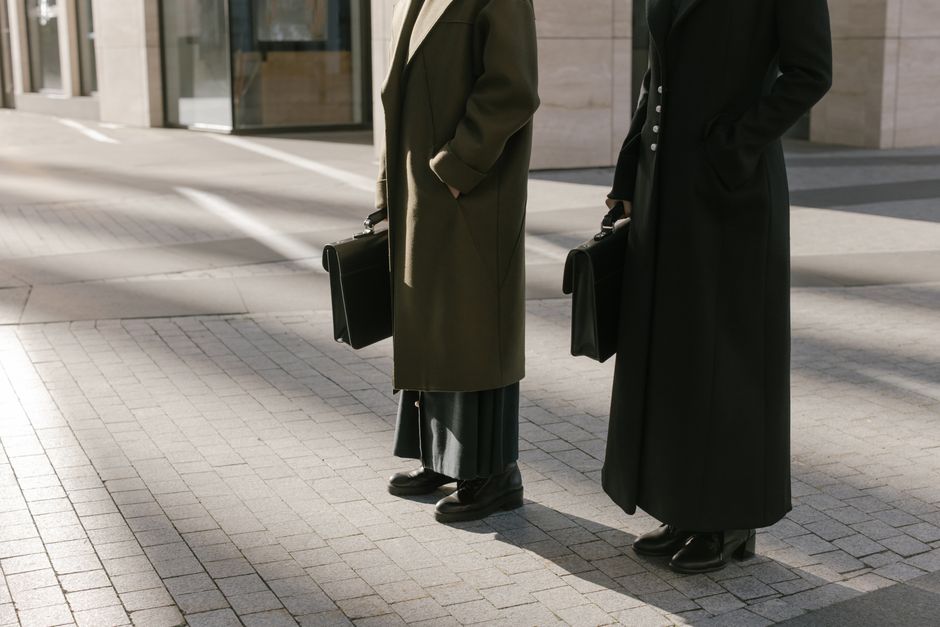
- For straight-leg trousers: allow one clean break over the boot. The hem should not stack in three or four folds. If the fabric keeps collapsing, the trouser is too long for that boot.
- For cropped trousers: show a small band of ankle only when the boot has a low shaft and a neat opening. A gap of roughly 3 to 6 cm looks intentional. A random 1 cm flash of skin often looks like an alteration mistake.
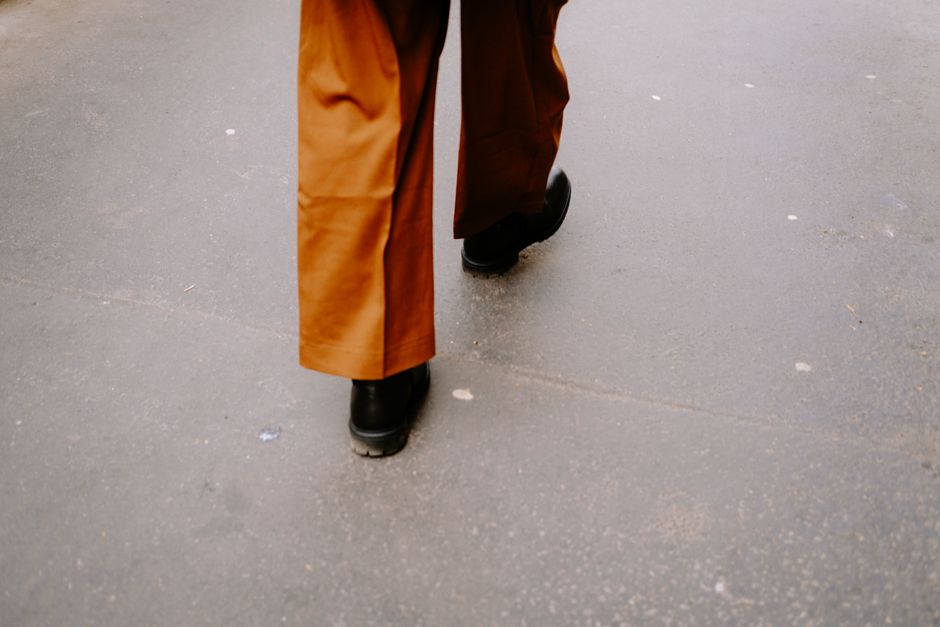
- For wide-leg trousers: use a heel or a thick sole and let the hem come close to the floor. The boot should add height underneath the fabric, not compete with it above the hem.
- For cuffed trousers: keep the cuff narrow and deliberate. A 3 to 4 cm cuff works better than a wide roll that lands directly on the boot collar.
Match the boot width to the trouser opening
This is the rule people skip. The opening of the trouser must either fit over the boot or end before it reaches the boot. A narrow ankle opening over a broad, chunky boot creates bunching. A wide opening over a delicate pointed boot can make the shoe disappear.
For a practical check, measure the trouser opening flat and double it. If the finished circumference is smaller than the boot shaft at its widest point, the trouser will sit on top of the boot instead of falling cleanly over it. That can work with a fashion-forward cropped hem, but it will not look like a full-length trouser.
Choose the right break
I prefer a no-break or very slight break with black ankle boots and tailored trousers. It gives the cleanest line and makes the outfit look sharper. Denim can handle more movement, so a single soft fold is fine. Do not force every trouser into the same hem. Wool trousers need a cleaner finish than relaxed cotton twill, and heavy denim needs room to fall without pulling across the boot.
My clear winner for everyday trousers is a straight leg ending just above a low Chelsea boot. It handles workwear, denim, and knit trousers without demanding a perfect alteration every time.
How to wear ankle boots with dresses
My strongest recommendation: control the exposed leg
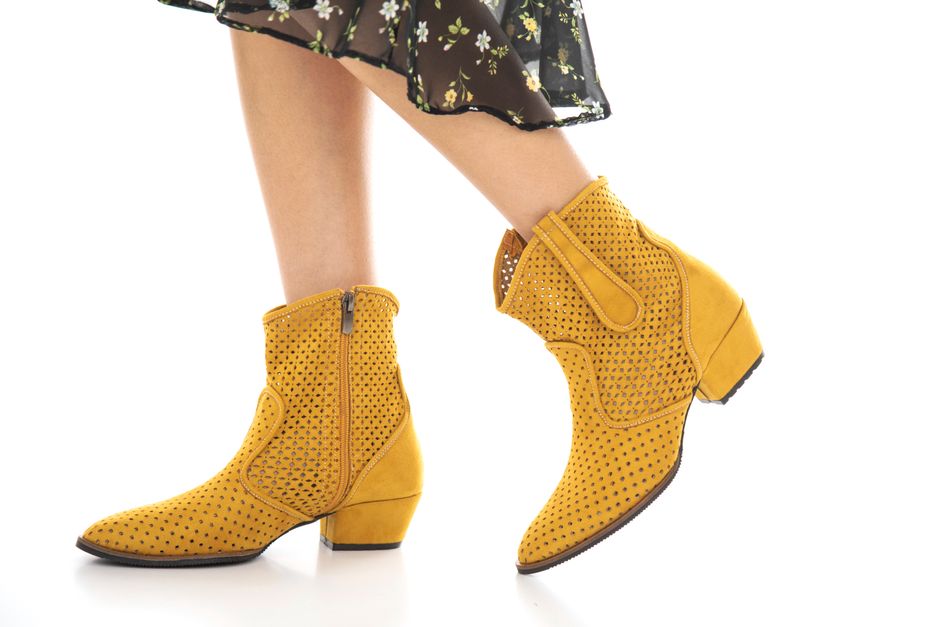
With dresses, ankle boots change the amount of leg the outfit shows. That makes the hem position more important than the dress brand or boot trend. For a midi dress, I want the hem to fall below the knee and leave a visible but controlled section of boot. The best range is usually 5 to 10 cm of shaft, depending on the boot height. If the dress ends exactly at the widest part of the calf, the lower leg looks broad and the boot feels disconnected.
For a mini dress, the opposite rule applies. Give the eye a longer stretch of leg between the hem and the boot. Around 10 to 20 cm can work, especially with opaque tights that repeat the boot color. A short dress with a bulky boot can look balanced because both pieces have strong visual weight. A tiny pointed boot under a loose mini dress often looks too delicate and leaves the outfit top-heavy.
Use color to join or separate the sections
Black boots with black tights make one long lower-leg column. This is the easiest solution for a winter dress. It works particularly well with a midi hem because the exposed skin disappears and the boot does not create a strong horizontal break.
With bare legs, a low-contrast boot usually looks softer. Brown leather with a warm floral dress, dark taupe with camel knitwear, or cream boots with a pale dress can keep the outfit fluid. High contrast is not wrong, but it needs a clean hem. A white dress, black tights, and black boots can look excellent because the contrast is repeated above the waist through a belt, bag, or jacket.
Boot examples that show the proportion difference
| Boot | Useful detail | Best outfit role | My verdict |
|---|---|---|---|
| Blundstone Classics #585 | About $219.95; rounded toe and visibly rugged sole | Midi knit dress or straight denim | Best with casual dresses and heavier fabrics |
| Dr. Martens 2976 Smooth Leather Chelsea | About $180; firm air-cushioned sole and elastic side panels | Mini dress, tights, or wide straight trousers | Best when the outfit needs deliberate weight |
| Vagabond Cosmo 2.0 Chelsea | About $210; streamlined leather Chelsea shape | Tailored trousers and simple midi dresses | Best all-round choice for a cleaner wardrobe |
| Vagabond Marja | 47 mm block heel and pointed toe | Fluid dresses and cropped trousers | Best when you want leg length without a stiletto |
The product verdict is clear: choose the Vagabond Cosmo 2.0 for the most flexible wardrobe, the Blundstone #585 for relaxed clothes, and the Dr. Martens 2976 when the boot itself should make a strong statement. Do not buy the heaviest boot in the shop if most of your wardrobe is made from thin silk, fine jersey, or narrow cigarette trousers. The proportions will fight each other.
Common mistakes that shorten the leg
Why does the outfit look chopped?
The usual cause is a high-contrast band at the ankle. White trousers, black boots, and bare skin create three separate blocks. That can be stylish, but only when the hem is crisp and the boot has a clean shape. If the trouser is loose and the boot is bulky, the ankle becomes the visual center of the outfit.
Another common problem is a dress hem that hits at the widest calf point. Move the hem up several centimeters or down several centimeters. A small change can restore the vertical line without replacing the dress.
Why do trousers bunch over ankle boots?
The trouser opening is too narrow for the boot, or the fabric is too soft to hold its shape. Do not keep pulling the hem down during the day. That only creates more folds. Try a slimmer boot, a shorter hem, or a straight-leg trouser with a firmer weave. The Dr. Martens 2976, for example, has enough sole and structure to support a straight or relaxed leg, but it is a poor match for a narrow trouser opening.
When should you not buy another ankle boot?
Skip the purchase if your wardrobe problem is really a hem problem. A new boot will not fix trousers that are 8 cm too long or a midi dress that ends across the widest part of your calf. Alter one existing item first. Also skip a pointed, high-contrast ankle boot if you mostly wear soft oversized knits and wide utility trousers. A rounded toe and stronger sole will make those clothes look more balanced.
My practical test is simple: take three outfits from your closet and photograph them from knee height, not from above. If the boot disappears in all three, it is too light. If the boot dominates every outfit, it is too heavy. Buy for the middle ground only when your current wardrobe shows a real gap.
The five-minute proportion check before leaving home
Make one adjustment before changing the whole outfit
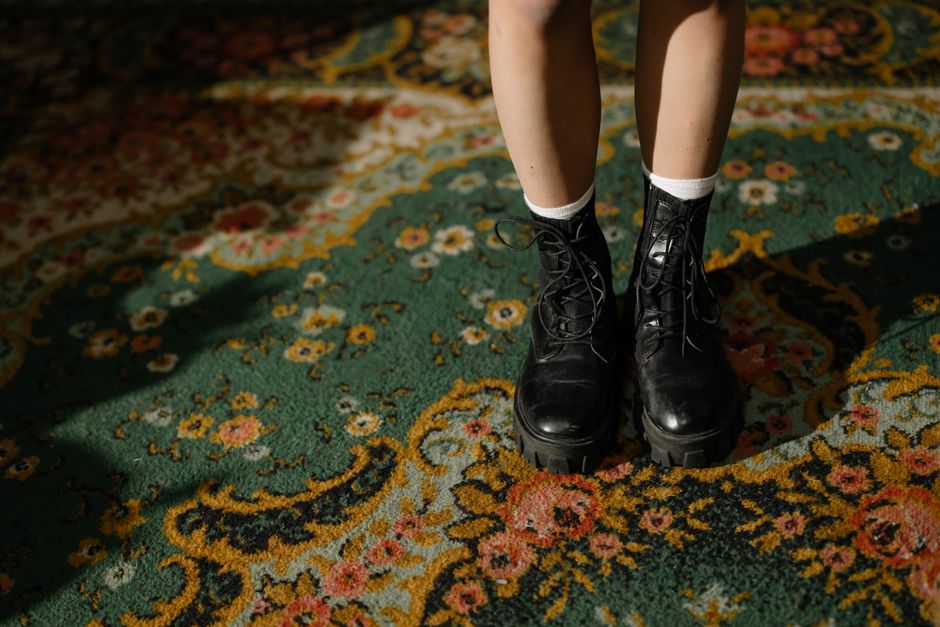
My firm opinion is that the hem matters more than the boot trend. Stand in a mirror and check where the eye stops: at the trouser hem, at the exposed ankle, at the top of the shaft, or at the dress hem. If those points form several hard horizontal lines close together, remove one of them by changing the hem, adding matching tights, or choosing a boot with a lower shaft.
Then check the amount of boot showing. With trousers, the boot should either sit clearly under the fabric or appear clearly above a cropped hem. With dresses, the boot should look like part of the outfit rather than an object placed beneath it. A matching belt, bag, or jacket can repeat the boot color and make a contrast feel planned.
The final decision
For straight trousers, choose a low Chelsea boot and a clean break. For wide trousers, choose a heel or substantial sole and keep the hem long. For midi dresses, choose a fitted shaft and avoid ending the dress at the widest calf point. For mini dresses, use the exposed leg or tights to create a clear stretch between the hem and boot.
Do not chase a universal ankle-boot rule; build one uninterrupted visual line, and the proportions will work.