
You leave the hotel at 9 a.m. in a polished pair of flat sandals, planning to walk three neighborhoods before dinner. By 1 p.m., the toe post is rubbing, the sole is sliding on a subway stair, and the pretty straps have turned every pavement crack into a complaint from your feet.
That is the real test for sandals for city walking. They need enough structure for pavement, enough grip for wet crossings, and enough visual restraint to work with trousers, dresses, and shorts. A soft footbed alone does not solve the problem. Neither does a high price.
This guide focuses on the details that earn money at checkout: strap placement, sole grip, adjustability, footbed shape, and the tradeoff between polished style and walking performance. Prices below are listed US prices checked in 2026 and can change with sales or color availability.
Quick verdict: for a stylish all-day pair, the FitFlop Lulu Leather Toe-Post Sandal is the strongest balance. For more built-in support, choose the Vionic Tide II. For a sale-focused budget, the Clarks Arla Stroll offers the clearest value.
Why city walking is harder on sandals than a casual stroll
City walking creates a repeated impact problem. A sidewalk gives you thousands of short, hard landings. A museum floor adds long periods of standing. Stairs ask your toes to grip. Cobblestones twist the foot from side to side. Heat can also make feet swell, so a strap that felt fine in the morning may feel tight after lunch.
The category exists because sneakers are not always the right social or visual choice. Many travelers want open footwear that works with linen trousers, a slip dress, or tailored shorts. The smart sandal borrows useful parts from a walking shoe without looking like a trail shoe.
Look for controlled movement, not maximum softness
A sandal should let your foot bend at the toes while keeping the heel and midfoot from sliding around. If the sandal folds in half under light pressure, your foot has to work harder to stabilize it. If the sole is stiff from heel to toe, you may feel restricted on stairs. The better middle ground is a flexible forefoot with a stable heel platform.
Pay attention to the sandal after ten minutes, not only during the first thirty seconds in a store. A thick cushion can feel pleasant at first and still leave your heel unstable. A shaped footbed can feel strange for five minutes and become more comfortable after your weight settles into it.
Grip matters more than a fashionable tread pattern
Look at the outsole. Fine grooves that run across the sole help with ordinary pavement, while deeper rubber sections are useful around wet subway entrances and polished stone. Smooth leather soles look elegant but give you little margin when the ground is slick. A modest rubber outsole is usually worth the small visual compromise.
For city use, you do not need a hiking sandal with aggressive lugs. You do need a sole that stays planted when you stop quickly, cross a painted road marking, or step from dry pavement onto a wet tile floor. My baseline is a secure heel, a textured outsole, and no visible side-to-side wobble.
Bottom Line: city walking rewards stable contact more than plush marketing claims. Buy the sandal that keeps your foot aligned and planted through a full day, not the pair that feels soft for two minutes.
Which style details are worth paying for?

Spend money on the parts that change how the sandal behaves. Decorative hardware, metallic finishes, and extra straps can improve an outfit, but they do not automatically improve comfort. Use this five-point check before you compare colors.
1. A real heel strap
A back strap is the single most useful style detail for long walks. It stops the sandal from escaping when you climb stairs and reduces the gripping work your toes must do. A thin ankle strap can look elegant, but it must sit securely without cutting into the skin.
2. Adjustable contact points
Hook-and-loop tabs are not always dressy, yet they solve swelling and width changes better than a fixed slide. Buckles work well when they have several holes and a smooth underside. Avoid decorative straps that cannot be adjusted at the place where your foot is widest.
3. A footbed with a visible shape
A completely flat footbed may suit a short errand, but long pavement days usually feel better with some contour under the arch and heel. That contour should support your foot without forcing it into a sharp ridge. If you can see a pronounced edge around the heel, check that your heel actually lands inside it.
4. A low, stable rise
A slight wedge can make a sandal look more polished and may feel easier than a totally flat sole. Keep the platform broad and the height modest. A 40mm wedge, like the one listed on the Clarks Arla Stroll, changes the look of a simple sandal but still has a more stable base than a narrow heel.
5. Materials that handle heat
Leather can soften and look refined, but it needs a break-in period. Textile dries faster and usually feels less precious on a hot trip. Smooth plastic may resist water yet create friction around the toes. Choose the material based on the weather and your walking plan, not only on the product photograph.
- Pay more for a secure heel, useful adjustability, and a grippy sole.
- Pay less for decorative buckles, a logo, or a color that appears only in one season.
- Do not confuse a thick sole with a supportive sole.
- Do not buy a fixed thong sandal for a trip built around 15,000 steps per day.
The best style detail is one that disappears while you walk. If you keep adjusting a strap, thinking about a hot spot, or clenching your toes, the sandal has failed its basic job.
Bottom Line: a heel strap and adjustable fit are worth more than extra decoration. Those two details protect your feet while still leaving room for a clean, fashion-led design.
How should sandals fit for a 10,000-step day?
Fit is where most city-walking purchases go wrong. People choose their normal size, stand for thirty seconds, and assume the sandal will behave the same way after eight hours. Feet change during the day, and open footwear gives you fewer places to hide a poor fit.
How much space should be in front of the toes?
Leave roughly 8 to 12 millimeters between your longest toe and the front edge. Your foot moves forward as you walk downhill or descend stairs. If your toes reach the edge in the store, they will probably hang over it later. Extra length should not mean a loose fit; the heel still needs to sit inside its cup or on the rear section of the footbed.
Where should the widest strap sit?
The main strap should hold the foot across the midfoot without pressing on the toes. Walk up a few steps and stop quickly. If your foot slides forward, the strap is too loose or the sandal lacks enough structure. If your skin bulges sharply around the strap, the sandal is too narrow or the upper has no useful adjustment.
What is the home test before wearing them outside?
- Try both sandals late in the day, when your feet are at their largest.
- Wear the socks or hosiery you might pair with the outfit, if the design allows it.
- Walk on hard floors for 15 minutes, including stairs and a quick stop.
- Check for rubbing between the toes, under the ball of the foot, and around the ankle.
- Keep the receipt until you have completed a short outdoor walk with no pressure points.
Break-in time is not a free pass for sharp rubbing. Mild stiffness from leather can improve. A strap that pinches the same spot after fifteen minutes will usually become a blister after several hours.
One more test: remove the sandal and inspect your skin. A light, even mark is normal. A deep red line or numbness means the fit is too tight. For people with bunions or wider forefeet, a wide option or multiple adjustable straps is a better solution than simply sizing up, which can leave the heel loose.
Bottom Line: buy for your late-day foot, leave toe room, and demand a secure heel. A sandal that passes the stair test indoors has a much better chance outside.
Which sandals for city walking offer the clearest value?

The table below compares three style-friendly choices and one sportier option. The prices are not promises; brands change promotions, and sale prices may apply only to selected colors or sizes.
| Model | Listed price | Useful specification | Best city use | Main compromise |
|---|---|---|---|---|
| FitFlop Lulu Leather Toe-Post | $95 | Leather upper, triple-density Microwobbleboard midsole, slip-resistant rubber outsole | Polished outfits and long pavement days | Toe-post design gives less adjustment than a back-strap sandal |
| Vionic Tide II Toe Post | $100 | Medium-wide fit, built-in Vio Motion Support, 0.72-inch heel height listed in product information | Travelers who want stronger arch structure | Orthotic shape may feel firm at first |
| Clarks Arla Stroll | $70 list; $44.99 offer shown | 40mm heel height, adjustable straps, wide fit available, machine-washable textile | Budget buyers who want a visible wedge | Chunkier look and less refined than leather |
| Teva Hurricane XLT2 | Price varies by color and stock | 26mm straps, EVA midsole, nylon shank, Spider Rubber outsole, 10.25oz half-pair weight in men’s M9 | Wet sidewalks, transit, and mixed terrain | Sport styling does not suit every dressy outfit |
What the price differences really buy
The $95 FitFlop and $100 Vionic are not automatically five times better than a $20 department-store sandal. Their value comes from construction details you use repeatedly: a shaped midsole, a rubber outsole, a stable heel zone, and materials that are less likely to collapse after a few outings. The Clarks pair proves that a lower price can still buy adjustment and a useful outsole, especially during a sale.
Which feature deserves the highest score?
Score each sandal out of five for fit security, grip, heat comfort, outfit range, and price. Give fit security and grip double weight. A sandal that looks excellent but scores two out of five for grip is not a city-walking bargain.
Bottom Line: the Clarks Arla Stroll is the value winner, the FitFlop Lulu is the style winner, and the Vionic Tide II is the support winner. The Teva Hurricane XLT2 is the practical pick for wet or rough routes, not the most elegant choice for dinner.
My clear picks for polished city outfits
My opinion: the FitFlop Lulu Leather Toe-Post is the best single pair for readers who want one sandal to cover sightseeing, lunch, and a casual evening. It costs $95, uses a leather upper, and combines a triple-density Microwobbleboard midsole with a slip-resistant rubber outsole. The triangular vamp looks cleaner than a technical walking sandal, while the cushioned platform gives it more walking credibility than a thin fashion flip-flop.
Choose FitFlop Lulu for the most versatile wardrobe
Choose the black or light tan version if you want the sandal to work with wide-leg trousers, midi skirts, denim, and simple dresses. The tradeoff is the toe post. People who dislike pressure between the toes should not force this style just because the sole feels good. For them, a back-strap sandal is the better purchase.
Choose Vionic Tide II when support comes first
The Vionic Tide II costs $100 and is listed in a medium-wide fit with Vio Motion Support. It has a more defined support feel than a basic flat sandal, which makes it my pick for someone who already knows that completely flat footwear leaves their feet tired. It is less visually delicate than the FitFlop, but the simple thong shape still works with casual dresses and cropped trousers.
Choose Clarks Arla Stroll when the budget is strict
The Clarks Arla Stroll has a $70 list price and a $44.99 offer displayed in the 2026 product listing. It comes in medium and wide widths, has adjustable straps, a 40mm heel height, and a machine-washable textile upper. This is the practical sale buy. The chunky silhouette is obvious, so I would pair it with relaxed linen, denim, or a simple maxi dress rather than a sharp office outfit.
Do not buy all three hoping one will solve every problem. Buy the FitFlop for outfit range, the Vionic for support, or the Clarks for low-cost walking comfort. That is a clearer use of $45 to $100 than paying more for a sandal whose only advantage is a fashionable embellishment.
Bottom Line: if I had to pack one pair for a warm city trip, I would take the FitFlop Lulu in black. If foot support has already shaped your shoe choices, I would spend the extra $5 on the Vionic Tide II instead.
When sandals are the wrong purchase
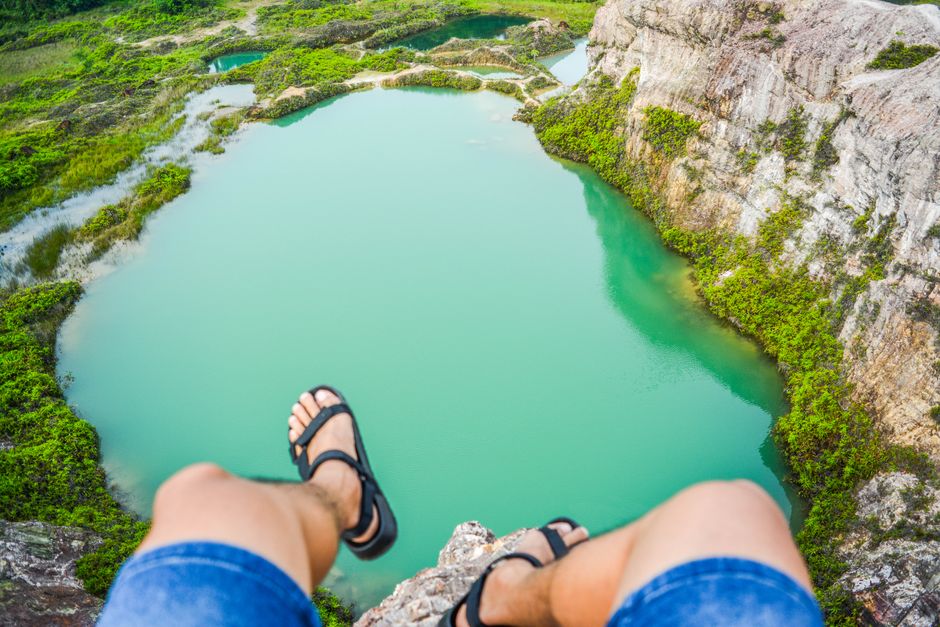
My strongest warning is simple: do not buy sandals for city walking when the route, weather, or condition of your feet calls for a closed walking shoe. Open footwear cannot protect your toes from crowds, keep out heavy rain, or solve a sandal that does not fit.
Skip sandals in these situations
- Choose sneakers or walking shoes for a day above 15,000 steps, steep hills, or long stretches of uneven cobblestone.
- Choose closed footwear when rain, cold wind, or muddy paths are likely.
- Choose a medical professional’s recommended shoe if you have ongoing pain, numbness, swelling, or a diagnosed foot condition.
- Do not use a smooth leather sole around wet stone or subway stairs.
- Do not buy a rigid arch shape simply because a product page calls it supportive.
Keep the purchase inside a sensible budget
A $100 sandal should remain a $100 purchase. Store financing can show promotional 0% APR, but many accounts also list variable rates around 29.99% to 34.99% APR after the promotion. At 29.99% APR, carrying a $100 balance for a year with equal monthly payments adds roughly $17 in interest. Late fees can reach about $30 to $41, depending on the account. This is not financial advice; it is a reminder to include the payment cost when comparing a sale with a full-price pair.
The best deal is the sandal you can wear comfortably, return if it fails, and pay for without carrying a balance. For a three-day trip, a $45 pair that creates blisters is more expensive in practice than a $95 pair that replaces a second shoe.
Final verdict: for fashionable city walking, prioritize a secure fit, a rubber outsole, a low stable platform, and one adjustable point. Buy the FitFlop Lulu for the best blend of style and walking comfort, the Vionic Tide II for built-in support, and the Clarks Arla Stroll when price matters most.
| Priority | Best pick | Why |
|---|---|---|
| One polished pair | FitFlop Lulu Leather Toe-Post | $95, leather upper, cushioned midsole, slip-resistant rubber outsole |
| Support-focused fit | Vionic Tide II | $100, medium-wide fit and Vio Motion Support |
| Lowest listed cost | Clarks Arla Stroll | $70 list price, with a $44.99 offer shown, adjustable straps and wide sizing |