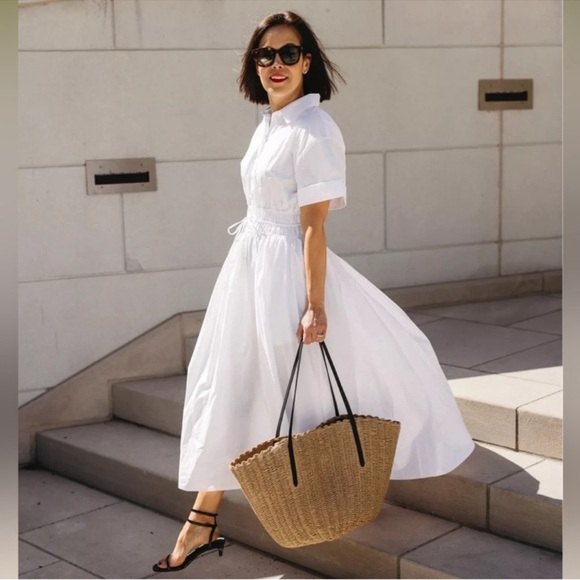
Want a dress that keeps a clean outline but does not feel like cardboard? Cotton poplin can do both, but the fabric weight, finish, cut, and care routine decide the result. Learn how the weave works, check fit in under a minute, and choose a silhouette that moves before you spend money.
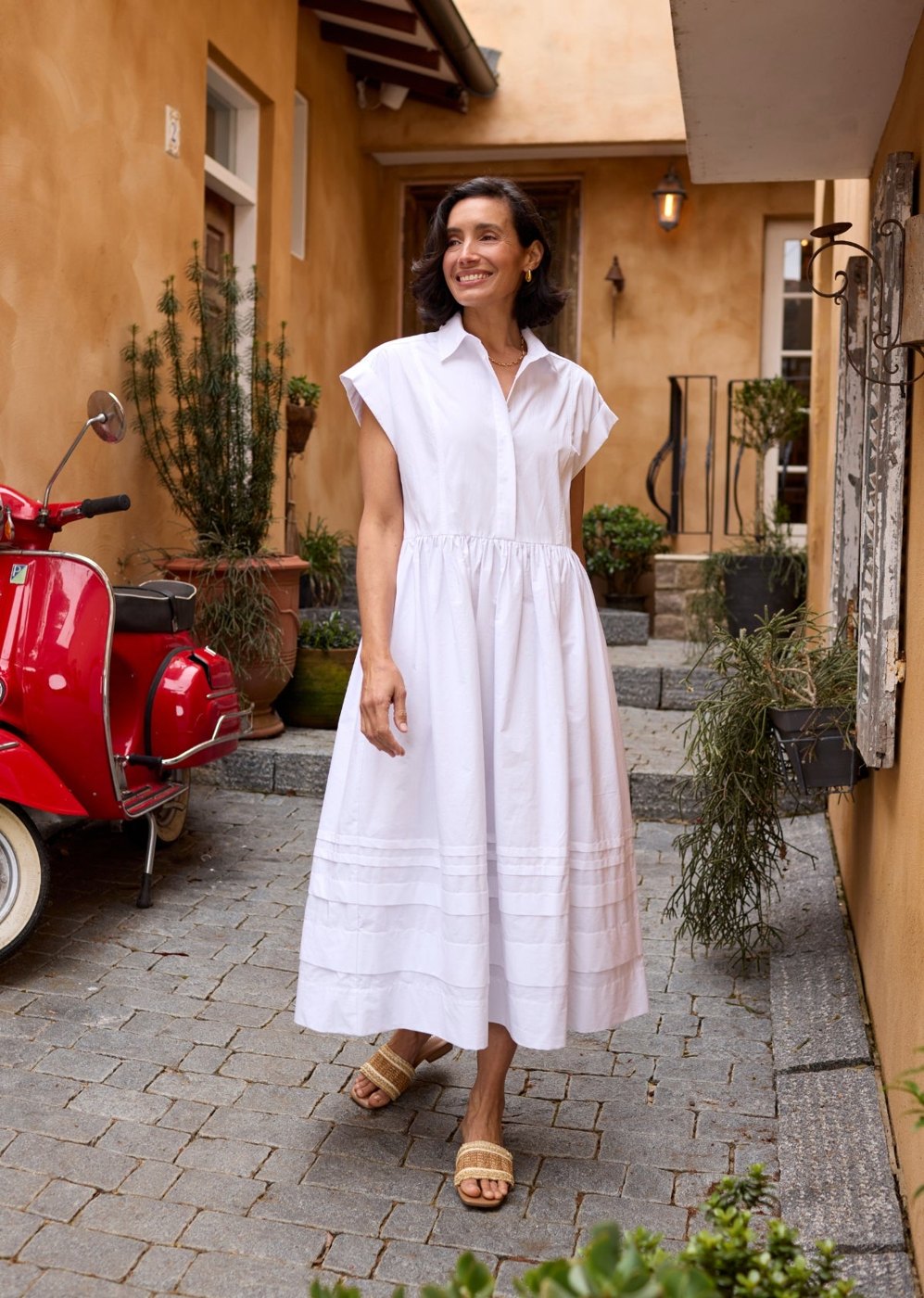
What Makes Cotton Poplin Feel Crisp but Not Stiff?
The short answer is the weave. Cotton poplin uses a tight plain weave, often with a finer warp yarn crossing a slightly heavier weft yarn. That close structure gives the fabric a smooth surface and enough body to hold a sleeve, collar, pleat, or full skirt. It does not need a coating or heavy starch to look polished.
Look at weight before you judge softness
Light poplin around 100 to 130 grams per square metre feels airy and works well for gathered dresses, hot weather, and loose shapes. Medium poplin around 140 to 180 grams per square metre creates a cleaner line and hides underwear more effectively. Heavy poplin can look sculptural, but it also traps more heat and may stand away from the body at the waist or hips. For most summer dresses, medium weight gives the best balance.
Softness comes from the finish and the cut
Two dresses can use 100% cotton poplin and feel completely different. A garment wash can relax the yarns. A smooth finish can make the surface feel cool and almost silky. A lined bodice can add comfort but also reduce airflow. The cut matters just as much. A relaxed armhole and a skirt with room to swing make crisp cloth feel easy. A tight sleeve, narrow waist seam, and stiff facing can make the same fabric feel restrictive. The best cotton poplin dresses create shape through pattern cutting, not through excessive stiffness.
How Do You Choose a Poplin Dress That Moves?
Start with movement, not the mirror. Cotton poplin looks neat on a hanger, so a static try-on can hide the problems that appear when you sit, reach, or walk.
Run this 60-second fit test
- Raise both arms. The dress should not pull sharply across the bust or lift more than a few centimetres at the hem.
- Sit in a chair. Check that the waist seam stays level and the skirt does not climb uncomfortably over the thighs.
- Walk ten steps. A shirt dress should swing from the hips rather than catch between the legs.
- Pinch the side seam at the bust. About 2 to 4 inches of total ease usually gives a fitted dress room to breathe; a loose style needs more.
- Turn sideways under bright light. If the buttons gape or the fabric shows every outline, size up or choose a lined version.
Check the details that decide comfort
Inspect the armhole, waist seam, and hem. A low armhole may look relaxed but can expose a bra when you lift your arms. A high armhole can improve coverage but needs enough width across the chest. For a defined waist, look for adjustable ties or back elastic rather than a rigid seam. The most useful dress has a firm neckline, a flexible waist, and a skirt that falls away from the body. That combination keeps the crisp shape while leaving room for normal movement.
Which Cotton Poplin Silhouette Earns Closet Space?
Choose the shape first and the print second. A good poplin dress should solve a specific wardrobe problem, not simply look attractive in a product photo. Use this comparison when you are deciding among common cuts.
| Silhouette | Best use | What to check | Verdict |
|---|---|---|---|
| Shirt dress | Office, travel, dinners | Button spacing and shoulder fit | Best one-dress wardrobe starter |
| Fit-and-flare midi | Polished daytime dressing | Waist seam and skirt volume | Best for a defined shape without cling |
| Tiered maxi | Heat, holidays, relaxed weekends | Fabric weight and transparency | Best for airflow, but avoid excess volume |
| Mini shift | City summer outfits and layering | Hem movement and armhole depth | Best with a jacket or flat sandals |
| Drop-waist dress | Modern, low-pressure styling | Where the skirt begins | Best when you dislike waist definition |
My strongest everyday choice
A shirt dress wins for most wardrobes because the collar, buttons, and vertical placket give crisp poplin enough structure without making the outfit feel formal. Wear it open over a tank, belted at the natural waist, or loose with flat sandals. If you prefer a softer line, choose a fit-and-flare midi with a gathered skirt rather than a heavily tiered maxi. Too many tiers add bulk and can make medium-weight poplin look puffy instead of fluid.
When you shop online, compare the garment length with a dress you already own. A listed length of 120 centimetres can land at the ankle on one person and mid-calf on another. The number matters more than the model photograph.
How Can You Soften Poplin Without Losing Its Shape?
Poplin usually becomes more comfortable after a few washes, but rough care can erase the clean shape that attracted you to it. The goal is controlled relaxation: soften the fibres while keeping the collar, seams, and hem stable.
Wash gently and dry with restraint
Turn the dress inside out and wash it at 30°C with a mild detergent. Use a low or medium spin, especially if the dress has gathers, embroidery, or a shaped waistband. Skip heavy fabric softener. It can leave a coating that dulls the cotton surface and reduces the fabric’s fresh, dry feel. Instead, give the dress space in the drum and remove it soon after the cycle ends. Smooth the button placket, collar, and side seams by hand before hanging it on a wide hanger or drying rack.
Use steam instead of aggressive ironing
Hang the dress in a steamy bathroom or use a garment steamer from a short distance. Start at the collar and work down the placket, then steam the skirt while pulling the hem gently into line. If you iron, use a medium cotton setting and press from the inside. Avoid flattening every fold in a gathered skirt; a little natural texture makes crisp cotton look softer. Do not spray starch unless you specifically want a uniform, formal finish. Starch adds sharpness but can make a summer dress feel scratchy and brittle.
The best care routine depends on the finish. A pre-washed dress may need only a quick steam. A new, tightly woven white dress may need one careful wash before it feels relaxed. If the garment shrinks, twists, or develops harsh creases after the first wash, the problem usually comes from heat or poor pattern balance rather than from cotton poplin itself.
Which Cotton Poplin Dresses Are Worth Paying For?
My pick for the most useful investment is a mid-weight shirt dress with an adjustable waist. It gives crisp poplin enough structure for work while still working with sneakers, sandals, or a cardigan. Prices move quickly, so treat the figures below as public price snapshots rather than permanent promises.
Best polished work-to-dinner option
The J.Crew Contrast-stitch midi dress in cotton-blend poplin was listed at $198, with a $139.99 sale price shown during the 2026 check. Its full skirt, contrast stitching, and forgiving waist make it the clearest choice for a polished dress that still feels relaxed. The cotton blend gives a little more flexibility than rigid 100% cotton. For a classic shirt-dress shape, the J.Crew Arden shirt-dress in cotton poplin was listed at $178. It is the better choice for travel because the button front creates several styling options.
Best soft-structure statement options
The Sézane Sorelle Dress was listed at €175 and uses 100% organic cotton poplin, pleats at the waist, a shirt collar, and a 132-centimetre shoulder-to-hem length in size 36. Choose it when you want a defined waist without a tight bodice. The Sézane Pam Dress, listed at $245, adds embroidery and a removable belt to a 100% organic cotton poplin midi shape. It earns the higher price through detail rather than extra stiffness. For a shorter, sharper look, the J.Crew High-squareneck mini dress in cotton poplin was listed at $178. My verdict: choose J.Crew for maximum versatility, Sézane Sorelle for a softer romantic line, and the Pam only when the embroidery will earn regular wear.
When Should You Skip Cotton Poplin?
Cotton poplin is not the right answer for every warm-weather outfit. It excels when you want a visible outline, clean seams, and a dress that looks finished with little styling.
Will poplin work in very hot, humid weather?
It can, but a lined bodice, tight sleeves, or heavy skirt may feel warmer than expected. Choose a lightweight unlined dress with a relaxed armhole, or switch to linen if airflow matters more than a smooth surface. Linen wrinkles faster, but that texture can feel more comfortable in humid conditions. For travel in high heat, linen-cotton blends often offer a better compromise than heavy poplin.
What are the most common buying mistakes?
Do not size down just because the waist looks loose on the model. Cotton poplin has limited stretch, so a tight bust or armhole will stay tight all day. Do not buy a sheer white dress without checking for a lining, pocket placement, and the colour of the fabric underneath. Finally, avoid oversized tiered dresses when you want a clean, narrow silhouette; extra volume can make crisp cloth look stiff and overwhelm a shorter frame.
When is jersey or Tencel the better choice?
Choose jersey for long sitting days, frequent travel, or outfits that need stretch. Choose Tencel or another drapey fibre when you want the dress to skim rather than hold a shape. Cotton poplin remains the better pick for structure, but the category is moving toward lighter weights, softer finishes, and blended fabrics that keep the neat outline while making everyday movement easier. That balance is what will keep cotton poplin dresses relevant beyond one summer trend.