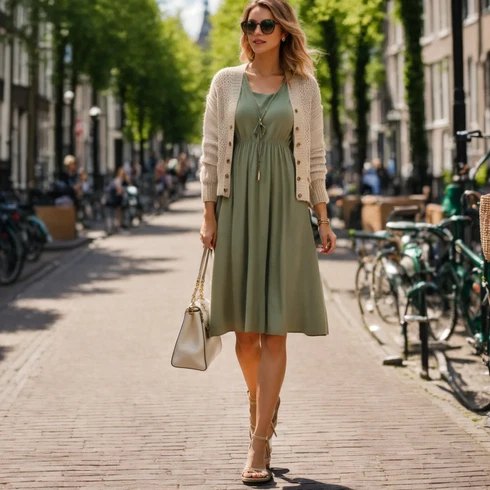
The best end-of-summer dress outfit uses one lightweight layer, one defined waistline, and shoes that match the weather. Start with a midi or knee-length dress in cotton, linen, viscose, or a thin knit. Add a cardigan when you need softness and warmth. Add a light jacket when you need structure, wind protection, or a sharper finish.
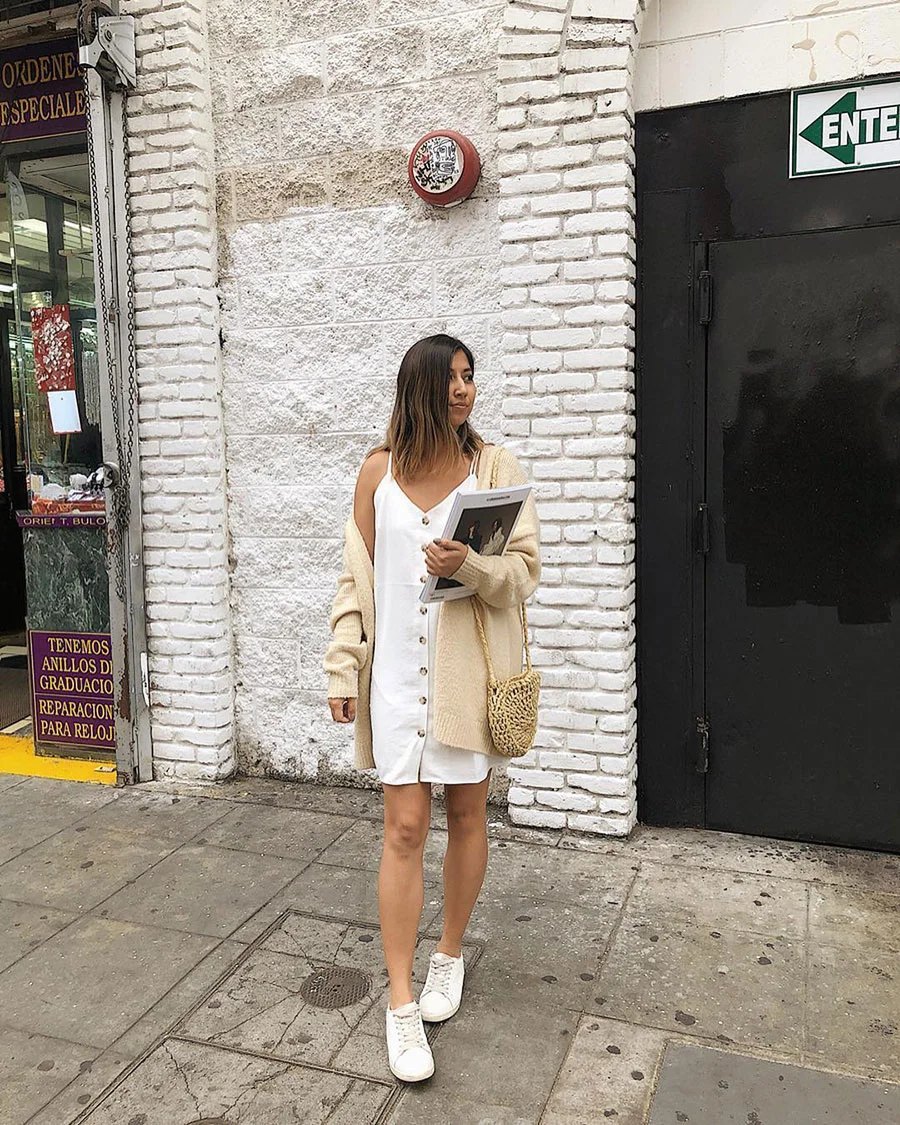
How do you layer an end-of-summer dress without looking bulky?
Choose the layer by shape first and warmth second. A loose dress needs a shorter cardigan or a cropped jacket so the outfit keeps a visible waist. A fitted slip dress can handle a longer cardigan, but the cardigan should stay open or close with one button. Too much fabric at both the bust and hip makes even a simple outfit look heavy.
Start with the dress silhouette
For a cotton poplin shirt dress, use a cropped cardigan that ends near the natural waist. For a bias-cut slip dress, choose a slim cardigan that follows the body instead of a thick cable knit. For a tiered maxi dress, pick a fitted denim jacket such as the Levi’s Original Trucker Jacket, which has enough structure to balance the volume below. The $98 price point also makes it a useful wardrobe anchor rather than a one-season purchase.
Match the layer to the temperature
At 70 to 78 degrees Fahrenheit, a thin cotton cardigan is enough for a cool office or evening patio. The Uniqlo UV Protection Crew Neck Cardigan, commonly priced around $39.90, works well because its fine knit folds into a tote and does not overpower a printed dress. Below 65 degrees, choose a denim or cotton-twill jacket instead. Keep the dress fabric light so the outfit remains comfortable indoors.
Use one focal point. If the dress has a bold print, keep the cardigan solid. If the dress is black, cream, or navy, a colored jacket can supply the contrast.
Which dress fabrics work best with cardigans and jackets?
Fabric weight matters more than color when building a late-summer outfit. The dress should feel breathable against the skin, while the outer layer should add enough coverage for changing temperatures. Use this chart before buying a new combination.
| Dress fabric | Best layer | Best temperature range | Main risk |
|---|---|---|---|
| Cotton poplin | Fine-knit cardigan or denim jacket | 68–82°F | Wrinkles at the waist |
| Linen blend | Linen overshirt or cropped cotton jacket | 72–86°F | Too many visible creases |
| Viscose slip fabric | Slim cardigan or soft blazer | 65–78°F | Cling and static |
| Lightweight jersey | Utility jacket or structured denim | 64–76°F | Layers losing shape |
| Thin sweater knit | Light trench or short jacket | 58–70°F | Overheating indoors |
Choose contrast in texture
A smooth jersey dress looks better with a textured cardigan because the materials do not blend into one flat surface. A linen-blend dress needs a smooth cotton jacket or crisp overshirt. Avoid pairing a loose linen dress with a chunky cardigan unless the cardigan is cropped; the two relaxed textures can make the outfit look unfinished.
Control static and wrinkling
For a clingy viscose dress, wear a lightweight half-slip or apply a small amount of fabric-safe anti-static spray before leaving home. For linen, steam the front panel and sleeves, then let the dress hang for five minutes. Do not press a cardigan directly against a damp dress. The moisture can stretch the knit and create a lumpy outline.
The clear winner for a travel wardrobe is a cotton-poplin dress with a fine cardigan. It resists cling, works with sneakers or loafers, and needs less care than silk or a very thin satin fabric.
What is the best cardigan or jacket length for each dress?
The strongest outfit usually keeps one line clean: either the waist or the outer edge. A cardigan ending at the widest point of the hip often cuts the body in an awkward place, while a long jacket over a full skirt can hide the dress completely. For most people, the safest choice is a layer that ends at the waist or a few inches below it.
Use a cropped layer with volume
Pair a tiered midi, smocked dress, or pleated skirt dress with a cardigan that ends between the natural waist and high hip. This keeps the skirt visible and stops the look from becoming a single column of fabric. Button the cardigan once at the center rather than pulling it tightly across the bust.
Use a longer layer with a narrow dress
A slim midi dress or column dress can support a cardigan that reaches the upper thigh. Keep the cardigan open and add a narrow belt only if the dress has enough room underneath. A long, loose cardigan over a loose maxi dress is the weakest combination because neither piece gives the body a clear shape.
For most end-of-summer wardrobes, choose a waist-length cardigan first and a hip-length jacket second. That order gives you more outfit combinations with fewer pieces.
How can you build an end-of-summer dress outfit in five steps?
Use this five-step routine when the morning feels warm but the forecast includes wind, air conditioning, or a cooler evening.
- Pick the base dress. Choose a midi or knee-length dress that leaves room for a thin layer without pulling across the shoulders. A cotton shirt dress is the easiest starting point.
- Set the color direction. For a printed dress, repeat one quiet color from the print in the cardigan or jacket. For a solid dress, use cream, denim blue, olive, chocolate, or black as the second color.
- Add one structured item. The Mango Denim Jacket with Pockets, often priced around $69.99, adds shape to a loose dress. The Levi’s Original Trucker Jacket at about $98 is the better long-term choice if you wear denim often.
- Choose shoes for the evening temperature. Flat sandals suit hot afternoons. Loafers, ballet flats, or low-profile sneakers make the outfit ready for a cool sidewalk or office.
- Finish with a practical bag. Use a shoulder bag or medium tote large enough for the cardigan when you remove it. A tiny bag forces you to carry the layer and usually makes the outfit less comfortable.
Best outfit formula for work
Wear a solid midi dress, a fine cardigan buttoned once, pointed flats, and a medium shoulder bag. Add a narrow belt only when the dress has a straight or relaxed cut. This formula looks finished without relying on a stiff blazer.
Best outfit formula for weekends
Wear a floral or striped cotton dress, a cropped denim jacket, white sneakers, and a canvas tote. Madewell’s The Jean Jacket, often listed near $138, gives a softer, less rigid shape than a very boxy trucker jacket. Pick it when comfort matters more than a sharp shoulder line.
What mistakes make layered summer dresses look awkward?
Why does the outfit look wider?
Usually, the cardigan is too thick or ends at the hip. Replace it with a fine-gauge knit and leave the bottom two buttons open. If the dress has a full skirt, keep the top fitted. If the jacket is oversized, the dress should have a narrow shape underneath.
Why does the dress look too summery for September?
The problem is often the accessories, not the dress. Swap beach sandals for loafers, ballet flats, or ankle boots. Choose a leather or structured canvas bag instead of a straw tote. A deep brown, burgundy, olive, or navy layer also shifts the outfit toward early fall without making it hot.
When should you skip the cardigan?
Skip it when the dress already has sleeves, a high neckline, and a dense knit fabric. Add a light jacket only if you need wind protection. You should also skip a bulky layer over a dress with large ruffles, dramatic sleeves, or heavy embellishment. The dress already supplies enough visual information.
The most common buying mistake is choosing a layer for its color alone. Check the shoulder width, hem position, sleeve volume, and fabric weight before deciding that two pieces belong together. A perfect beige cardigan still fails if it catches on the dress or ends at the widest part of the body.
Which end-of-summer dress layering choices are worth keeping?
Build around three dependable combinations: a cotton midi with a fine cardigan, a slip dress with a slim jacket, and a relaxed maxi with a cropped layer. These combinations solve the real problem of late summer: temperatures shift, but the calendar still calls for lighter clothing.
The most versatile combination
A cotton midi dress with a fine cardigan is the best choice for offices, travel, and casual dinners. It works with sandals in the afternoon and loafers at night. A cardigan around $40 to $60 is enough; spending more only makes sense when the fiber, fit, or construction clearly improves.
The sharpest combination
A slip dress with a short denim jacket creates the strongest balance between softness and structure. Use this when you want the dress to feel less delicate. A Levi’s Original Trucker Jacket at roughly $98 is the practical pick for frequent wear, while the Mango Denim Jacket at about $69.99 suits a smaller budget.
The best choice for warm climates
A linen-blend maxi with a cropped cotton jacket gives coverage without trapping as much heat as a blazer. Avoid heavy wool, thick boucle, and lined leather until the temperature stays below 65 degrees. For shoppers who dislike jackets, a lightweight cardigan remains the better choice because it packs smaller and adjusts faster indoors.
As summer fades, the most useful dresses will be the ones that accept a new layer without losing their shape. A good cardigan or light jacket does more than extend a dress’s season; it lets one breathable piece move through warm afternoons, cool commutes, and the first crisp evenings of fall.