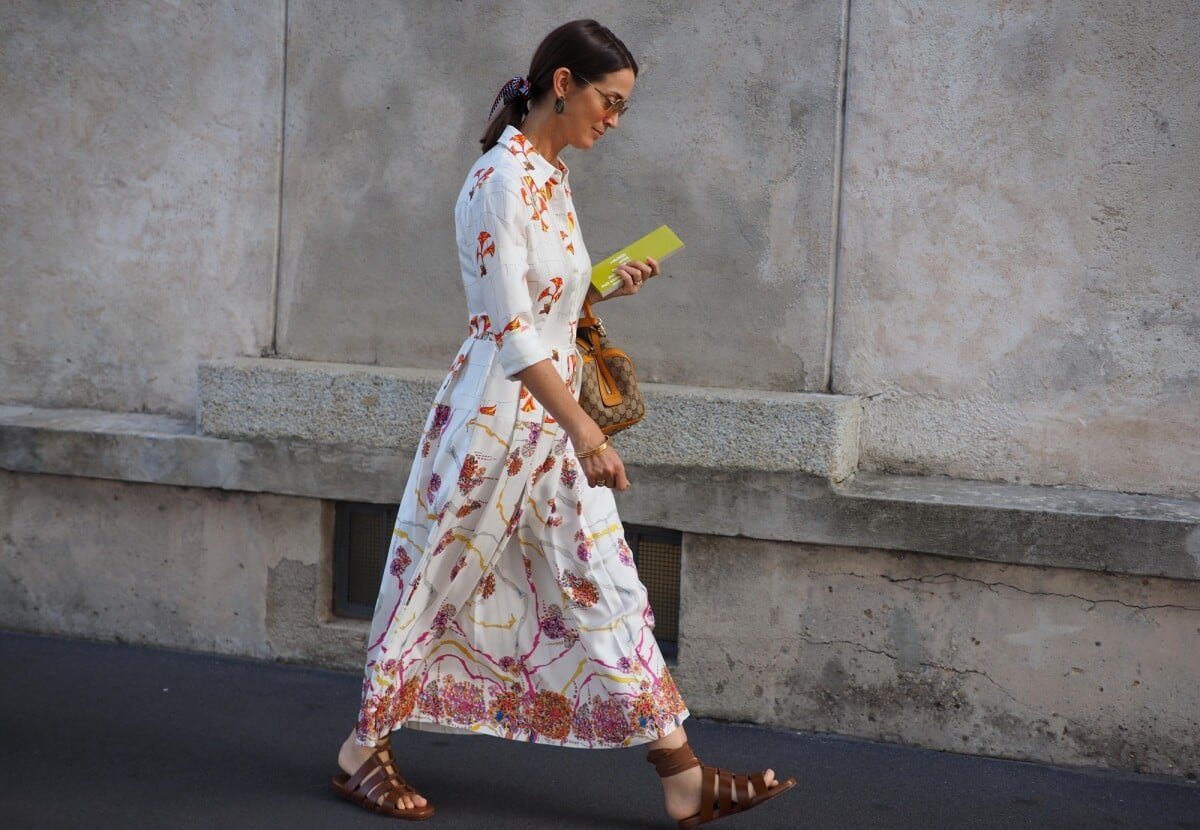
A one-inch hem adjustment changes the visible leg line by about 2.8% on a 36-inch knee-to-floor measurement. That small shift can decide whether flat sandals with dresses look intentional or slightly heavy. The fix is not more height. It is matching the hem, the sandal’s visual weight, and the amount of ankle you show.
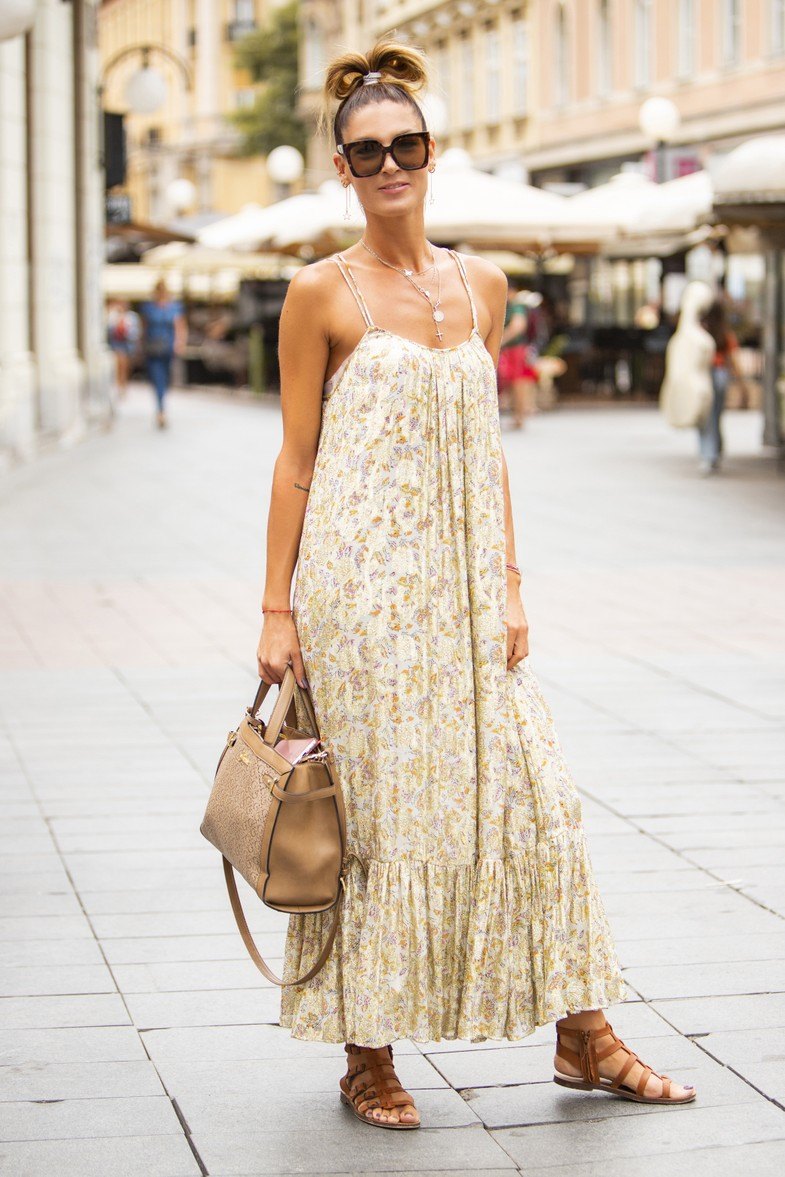
Why flat sandals change dress proportions
Flat sandals remove the lift that heels give a dress. That changes the outfit’s balance from the floor upward. A heel creates a longer, narrower line; a flat sandal leaves more visual weight at the ankle and makes the hem more noticeable. This is why the same dress can look polished with a pointed heel but broad or shortened with a thick two-strap sandal.
The ankle is the visual hinge
The ankle connects the dress to the shoe. If the hem stops at the widest part of the calf and the sandal also has a wide horizontal strap, the eye sees two strong breaks close together. The result can look chopped, especially in stiff cotton or dense linen. A cleaner line comes from placing the hem either above the knee, below the calf’s widest point, or close to the floor.
Balance comes from contrast
A loose dress needs a clear point of definition. With a flat sandal, that point can be a visible ankle, a narrow strap, or a hem that exposes the top of the foot. A fitted dress can handle more sandal coverage because the body line already supplies structure. The practical rule is simple: the softer and wider the dress, the cleaner and more open the sandal should look.
The hem-length chart that actually works
Use these measurements as starting points, then check the dress while standing in the sandals you plan to wear. The goal is not a universal number. The goal is avoiding a hem that lands exactly where the shoe creates its widest visual block.
| Dress length | Starting hem point | Flat sandal that balances it | Main exclusion |
|---|---|---|---|
| Mini | 4 to 8 inches above the knee | Thin straps or a barely-there sandal | Very heavy platform soles |
| Knee length | At the kneecap or 1 inch below | Low-profile leather or slim sport sandals | Straps ending at the widest calf |
| Midi | 2 to 4 inches below the knee, below the calf’s widest point | Open toe with a narrow upper | One wide ankle strap at mid-calf |
| Maxi | 0.5 to 1 inch above the floor | Flat sandals with a firm sole | Hem dragging over the toe box |
Why midi hems need the most care
Midi dresses create the highest risk because the hem already cuts across the lower leg. Raise the hem slightly if it lands on the widest part of the calf. If alteration is not possible, use a sandal that shows more skin across the foot and keep the color close to your skin or dress.
Why maxi hems need a floor check
A maxi dress should skim the top of the foot without hiding the sandal completely. Walk ten steps, turn, and sit down. If the hem catches under the heel or folds over the toes, it is too long for a flat shoe. Shortening it by half an inch can improve both movement and proportion.
Choose the sandal’s visual weight before the color
My strongest recommendation is to match the sandal’s mass to the dress fabric before matching its color. A fine cotton slip dress usually needs a slim sandal. A structured denim or poplin dress can carry a wider strap, a lug sole, or a modest platform. This choice controls the outfit more than black versus brown.
Light dresses need exposed foot
For silk, viscose, gauze, and soft jersey, choose two or three narrow straps, a squared toe, or a simple thong shape. Keep the sole close to the ground, around 0.25 to 0.75 inches. The visible foot creates air under the dress. A broad molded footbed can still work, but keep the color quiet and the hem clean.
Structured dresses can carry more sole
Denim, canvas, linen twill, and shirting cotton have enough body to support a more substantial sandal. A 1 to 1.5-inch platform can make a calf-length dress feel deliberate instead of shortened. The tradeoff is weight: the shoe becomes part of the outfit’s statement. If the dress has gathered sleeves, a large print, and a full skirt, do not add a giant platform unless you want a deliberately bold silhouette.
For most daytime outfits, a medium-width strap and a sole under 1 inch are the safest proportion. Use a heavier sandal only when the dress has equal structure above the hem.
A five-minute fitting method before you leave
Do not judge the outfit from a hanger or a mirror pose. Flat sandals change how a dress moves, so test the complete combination in motion.
Run this order of checks
- Put on the exact sandal, including any socks, insoles, or foot pads you will actually use.
- Stand naturally and mark where the hem falls at the front, sides, and back.
- Walk ten steps. Watch for a hem that hooks under the toes or exposes too much ankle when you move.
- Turn sideways. If the dress ends at the widest calf and the sandal has a wide strap, change one of those elements.
- Sit in a chair. A short midi can rise several inches, while a maxi can bunch under the feet.
- Take a phone photo from knee height. A low camera angle shows whether the shoe is visually swallowing the dress.
Use a simple alteration test
Pin the hem up by 0.5 inch, then by 1.5 inches, and compare both photos. The smaller adjustment often fixes a maxi. A midi may need a larger change to move the hem below the calf’s widest point. If neither position works, the problem is the dress cut, not your sandal.
What fails, and why the outfit looks off
The most common mistakes are small, repeatable, and easy to correct. The strongest fix is usually a hem change, not a new wardrobe.
Why does a midi dress look stumpier with flats?
The hem may sit on the widest part of the calf, creating a horizontal line that competes with the sandal strap. Move the hem below that point or expose more foot with a low-cut sandal. Avoid adding a dark ankle strap as a first fix; it can create another hard line.
When should you skip a chunky platform?
Skip it when the dress is thin, drapey, or visibly shorter in front than in back. The platform can pull the eye downward and make the fabric look fragile. Choose a flat sole with a firm but narrow edge instead. Buy the chunky style only when the dress has enough weight, length, or tailoring to meet it.
What if the dress already has a bold print?
Reduce the sandal’s contrast. A neutral sandal with a simple upper lets the print stay in charge. A second loud element at the foot can make the outfit look busy, especially when the hem is above the ankle. Texture is safer than another color: matte leather, woven straps, or a quiet metallic finish add interest without creating a new focal point.
Three real sandals matched to specific dress lengths
These examples show how construction changes the styling decision. They are reference points, not mandatory purchases. Choose the shape that solves your hem problem, then compare fit, return terms, and comfort before buying.
For casual midis: Teva Original Universal
The Teva Original Universal has three adjustment points, quick-dry recycled-plastic straps, a molded EVA midsole, and a listed half-pair weight of 5.4 ounces in women’s size 7. It works best with a casual midi whose hem falls below the widest calf. The practical verdict: choose it for walking-heavy days and sporty cotton dresses, but avoid pairing it with a delicate slip dress because the technical straps will overpower the fabric.
For relaxed dresses: Birkenstock Arizona
The Birkenstock Arizona uses two adjustable straps, a contoured cork-latex footbed, and a flexible EVA sole. Its broad upper needs room, so it looks strongest with a maxi, a straight linen dress, or a midi that has enough fabric to meet the sandal’s width. The verdict: it is the better choice for grounded, casual outfits; do not use it to make a thin, fluttery dress look dainty.
For heavier dresses: Dr. Martens Voss II
The Dr. Martens Voss II has a 1.5-inch platform and a 1.875-inch heel measurement, with adjustable straps and a lightweight EVA sole. That height changes the hem equation. It can support a denim mini or structured maxi, but it is too visually forceful for a soft, narrow midi. The verdict: pick it when the dress has weight and attitude; skip it when the outfit needs lightness.
The final verdict for a balanced outfit
Start with the hem, not the shopping tab. For a mini, keep the sandal visually light; for a midi, move the hem below the calf’s widest point and expose the foot; for a maxi, leave roughly half an inch to one inch above the floor.
The clearest everyday formula
A relaxed midi, a medium-width flat sandal, and a hem that clears the widest calf is the most reliable combination for walking, errands, and warm-weather dinners. It gives the eye one clean break instead of two competing ones. Keep the sandal close in value to the dress or skin when you want a longer line; use contrast only when the shoe is meant to anchor the outfit.
Return to the one-inch problem
That opening scenario does have a practical resolution: pin the dress up by one inch, walk in the sandals, and check the side view before deciding the outfit fails. Small changes in hem placement create a measurable shift in the leg line, so balanced flat-sandal dressing usually comes from precision rather than extra height.