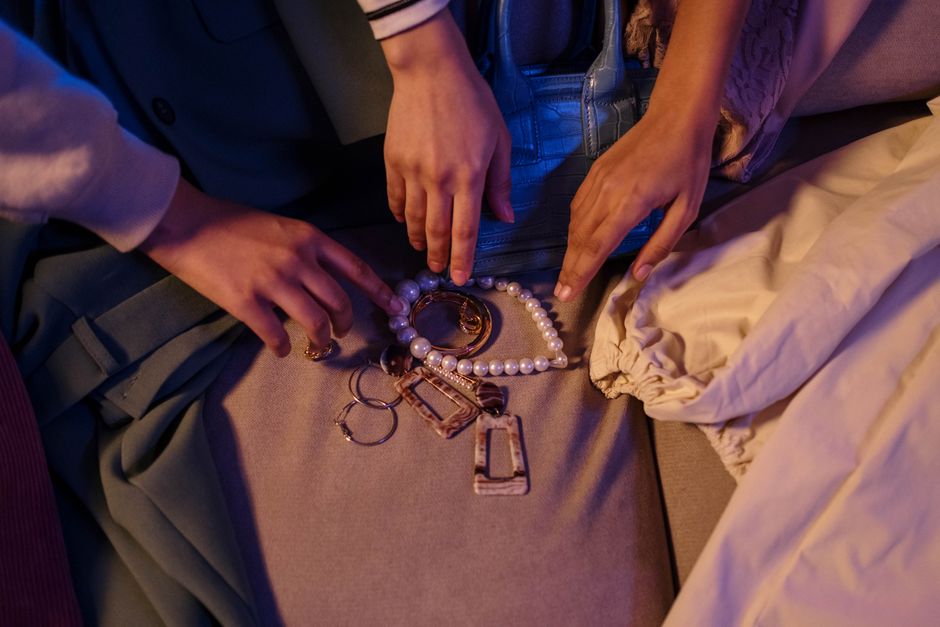
A delicate chain can disappear against a chunky knit, while oversized earrings can fight with a dramatic sleeve. The fix is not matching every color; it is matching the visual weight of the jewelry to the clothing around it.
Why Jewelry Scale Matters More Than Matching Metals
The eye reads visual weight first
Jewelry scale means the visible size, thickness, length, and presence of a piece. It works like punctuation in an outfit. A fine necklace creates a quiet pause. A wide cuff or large pendant creates a full stop. The wrong scale makes an outfit feel accidental even when every item is attractive on its own.
Start with the garment, not the jewelry box. A thin jersey top has little visual weight, so a 2mm chain or small pendant may look balanced. A cable-knit sweater has thick lines and heavy texture, so a chain that fine can vanish. A larger pendant, a layered pair of chains, or medium hoops gives the eye something that can hold its place.
Use a 1-to-3 balance test
Stand about six feet from a mirror. Ask where your eye lands first. If the neckline dominates, add jewelry that reaches at least one-third of its visual width. If the jewelry grabs attention before the garment, reduce either the pendant size or the number of pieces. This simple test works better than rules claiming every body type needs one fixed necklace length.
Texture also counts. A smooth 25mm pendant may read lighter than a rough, beaded pendant of the same width. Shine, contrast, and movement increase perceived size. A small crystal can attract more attention than a larger matte metal disc. Scale is a visual calculation, not just a measurement.
How to Match Jewelry Scale to Each Neckline
V-necks, scoop necks, and crew necks
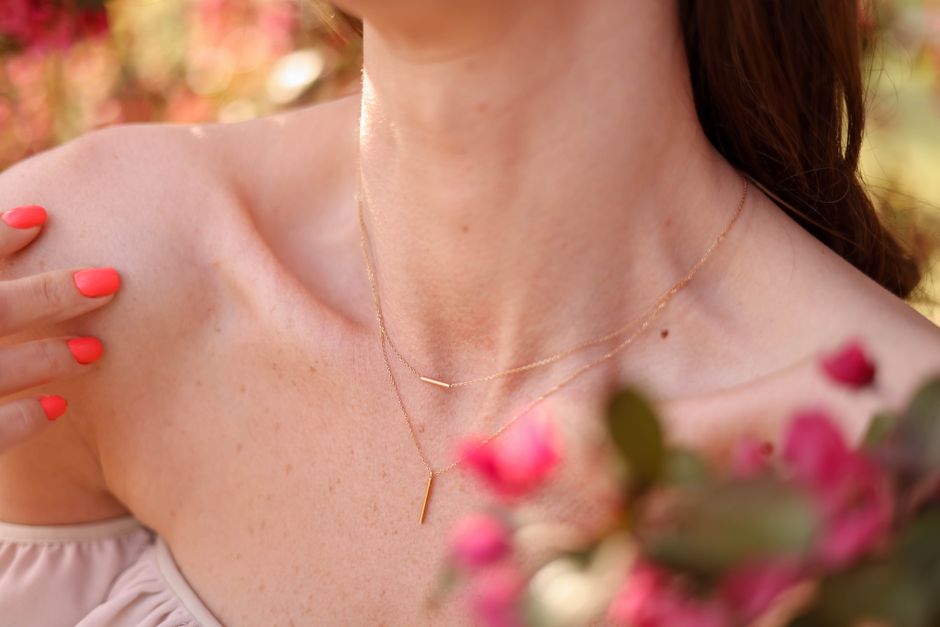
A V-neck creates a clear vertical path. Follow that path with a pendant that ends inside the V, usually 16 to 20 inches long. A pendant between 15 and 30mm works for most lightweight blouses and fine knits. A deep V can handle a larger pendant or a longer chain, but the piece should still finish above the bust line if the goal is a clean focal point.
A scoop neck leaves more open skin, so it can support a wider pendant, a short layered necklace, or a cluster of small chains. The neckline already has a curved shape; curved jewelry echoes it without creating a hard break. A crew neck is different. Since the fabric sits high on the chest, a pendant that falls directly on the collar can look crowded. Choose a necklace that sits above the neckline or drops clearly below it.
Collars, boat necks, and off-shoulder cuts
A shirt collar is already a strong frame. Small pendants often get lost under it, so a short chain tucked above the collar or a larger pendant worn over the shirt usually gives a cleaner result. Keep the pendant width close to the space between the collar points instead of letting it compete with the entire shirt.
A boat neck creates a long horizontal line. Earrings and brooch-like pieces work especially well because they reinforce that width without adding another line across the chest. For an off-shoulder neckline, a necklace can work, but it should be deliberate: choose a bold collar or a simple pendant, not three unrelated layers. The verdict is clear: match the direction of the jewelry to the direction of the neckline before matching metal color.
How Sleeve Volume Changes Earring and Bracelet Size
Use the sleeve as a visual-weight signal
Fitted sleeves leave the wrist and arm visually quiet, so a medium cuff, stacked bangles, or a watch with a 32 to 38mm case can add useful structure. Slim bracelets work too, but several fine pieces may look fussy beside a sharp blazer. One substantial piece usually has more impact than five tiny ones.
- For narrow, fitted sleeves: use medium hoops, a 5 to 8mm ring, or one cuff around 10 to 20mm wide.
- For puff sleeves: reduce wrist clutter and move interest toward the ears. Medium or large earrings balance the fabric without adding another crowded shape at the cuff.
- For rolled shirt sleeves: a watch plus one bracelet is enough. Leave a small gap so the pieces move separately instead of forming one metal block.
- For wide cuffs: skip bracelets that sit directly on the fabric edge. Choose earrings or rings instead, or wear a narrow bracelet above the cuff where it can be seen.
Movement changes the answer
Long sleeves and fringe-like jewelry both move. Put movement in one place. Large drop earrings with a wide sleeve can look intentional for evening dressing, but long earrings plus stacked bangles plus a swinging pendant creates three competing points. The strongest everyday choice is one moving element and one quiet supporting piece.
For most outfits, earrings should be slightly more visible as sleeve volume increases. Sleeves frame the torso, while earrings stay clear of the fabric. That makes them a safer place to add scale.
Jewelry Scale by Outfit Situation
| Outfit situation | Best starting scale | Common mistake | Clear fix |
|---|---|---|---|
| Fine knit and scoop neck | 16 to 20 inch chain, 10 to 20mm pendant | Tiny pendant disappears | Add a second fine chain or choose one wider pendant |
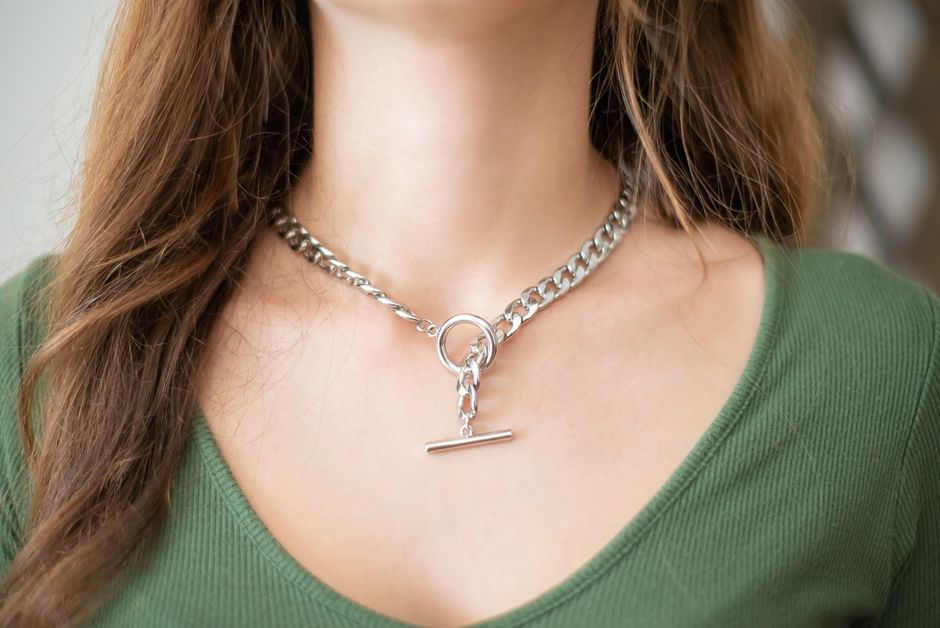
| Chunky sweater and crew neck | 20 to 24 inch chain, 25 to 40mm pendant | Short chain sits on the fabric | Use length and contrast to create separation |
| White shirt with collar | Short chain or 20 to 30mm pendant | Several delicate layers hide under the collar | Wear one visible pendant or a bold earring |
| Puff sleeve blouse | Medium hoops or 20 to 35mm studs | Large cuff fights the sleeve volume | Move scale to the ears |
| Tailored blazer | Medium pendant, cuff, or 25 to 45mm hoops | Only micro-jewelry looks unfinished | Choose one structured statement piece |
Build from one anchor piece
Choose the item that should be noticed first. With a blazer, that may be a 35mm hoop or a solid cuff. With a low scoop neck, it may be a pendant. Keep the other pieces at roughly half the visual weight of the anchor. This creates hierarchy and limits the random look caused by wearing every favorite piece at once.
The tradeoff most stylists miss
More jewelry does not always create more polish. Several small pieces can look lighter than one medium piece, but they also create more edges, reflections, and movement. Use layers when the outfit is simple and the neckline is open. Use one strong piece when the garment already has texture, volume, or decoration.
Bottom Line: the best scale is the size that restores balance after the clothing has made its visual statement.
Which Jewelry Pieces Give You Honest Scale References
Three useful reference points
- Tiffany & Co. Elsa Peretti Open Heart Pendant: the sterling silver medium version is 22mm wide on a 16-inch chain and has been listed at $700 in the United States. It is a useful reference for a visible pendant on a scoop neck or open shirt.
- Missoma Spiral Large Pendant Necklace: the silver-plated version measures 27.8mm by 23.5mm, weighs 9.8g, adjusts from about 18.1 to 19.6 inches, and has been listed at $236. Its larger surface makes it easier to see over a knit or plain crew neck.
- Mejuri Tube Medium Hoops: the 18k gold vermeil version has been listed around $118. The medium label makes it a practical benchmark for a noticeable but wearable hoop with tailored shirts and fitted sleeves.
- Pandora Sparkling Round Halo Pendant Collier Necklace: its adjustable chain uses 38cm, 42cm, and 45cm settings. That range shows how a small length change can move a pendant from a high neckline position to a more open chest position.
Use the references without buying blindly
These pieces are measuring tools for proportion, not universal best buys. A 22mm pendant may feel large on a petite frame with a high crew neck and too small against a heavy sweater. Try a paper circle cut to the same width, or hold a ruler against the garment in a mirror. That five-minute test prevents a costly mistake better than marketing language about timeless scale.
Price also needs a reality check. The listed examples range from roughly $118 to $700 before taxes, so do not treat a luxury logo as proof of better proportion. If a purchase is financed, card offers can range from 0% introductory APR to about 19.99%–29.99% variable APR, with annual fees from $0 to $95. This is not financial advice. For a fashion purchase, paying cash within a set budget is usually easier to evaluate than carrying a balance for a piece that may not suit your wardrobe.
Bottom Line: use the Mejuri hoop as a medium earring benchmark, the Tiffany pendant as a compact statement benchmark, and the Missoma pendant as a larger necklace benchmark.
Jewelry Scale Questions That Stop Outfit Mistakes

Should the necklace match the neckline exactly?
No. It should either echo the neckline or create clear separation from it. A pendant ending on top of a high crew neck often looks cramped. The same pendant can work when it sits several inches below the fabric or above the collar. The gap matters more than perfect shape matching.
Can large earrings and a necklace be worn together?
Yes, but give one piece the lead. Large hoops with a small pendant usually look cleaner than large hoops, a wide pendant, and layered chains. Keep the secondary piece simple, close to the body, and free of extra movement.
When should jewelry stay small?
Keep jewelry small when the garment already carries strong detail: sequins, ruffles, large buttons, bold prints, or a high-contrast collar. Small does not mean invisible. A 10mm stud, a 2mm chain, or a slim ring can finish the outfit without starting another visual argument.
Return to the opening problem: a delicate chain disappears against a chunky knit because the garment has more visual weight. Move that chain lower, add a second line, or replace it with a 25mm pendant. The sweater remains the star, but the jewelry now has enough scale to look chosen rather than lost.