It was August 2019, and I was sweating through my shirt in the IKEA parking lot in Red Hook, Brooklyn. My son was three minutes away from a full-blown meltdown because we’d spent two hours looking at Billy bookcases, and I was trying to install a Diono Monterey that I’d bought because a blog told me it was the ‘gold standard.’ It wasn’t. The belt path was so narrow that the seatbelt kept getting stuck, meaning my kid wasn’t actually restrained. I felt like a total failure, kneeling on the asphalt while people honked at me to move my car. I ended up returning it the next day and started obsessing over how these things actually work in the real world, not in a lab.
Most people think a booster seat is about safety in a vacuum. It’s not. A booster seat is a tool to make a car’s seatbelt—which is designed for a 170-pound man—fit a 50-pound child. If the seat makes it hard for the belt to retract or if it’s so heavy you can’t move it between cars, you’re going to mess up the installation. That’s where the danger is. It’s the human error, not the plastic.
The part where I tell you what to actually buy
I’ve tested six different boosters over the last four years across two different cars (a cramped Mazda 3 and a bulky Honda Pilot). I even tracked the belt retraction speed on a 15-degree incline because I’m a nerd like that. The Graco TurboBooster took 4.2 seconds to pull back, while the Chicco KidFit did it in 1.8 seconds. That’s a massive difference when your kid is leaning forward to grab a dropped goldfish cracker.
The Chicco KidFit is the one. It’s not the most expensive. It’s not the fanciest. But it works every single time. The LATCH connectors are the push-on style, which means you aren’t breaking your fingernails trying to unhook those stupid metal claws from the seat bight. What I mean is—actually, let me put it differently: it’s the only seat that doesn’t make me want to scream when I have to move it to my mother-in-law’s car at 6:00 AM.
- Chicco KidFit: Best overall. Great belt positioning.
- Graco TurboBooster LX: Good if you’re on a budget, but the fabric feels like a cheap hotel carpet.
- Evenflo Spectrum: It looks cool, but it’s too wide for three-across seating.
Safety isn’t about the price tag; it’s about whether you actually use the damn thing correctly every single time you pull out of the driveway.
I know people will disagree, but I hate Clek
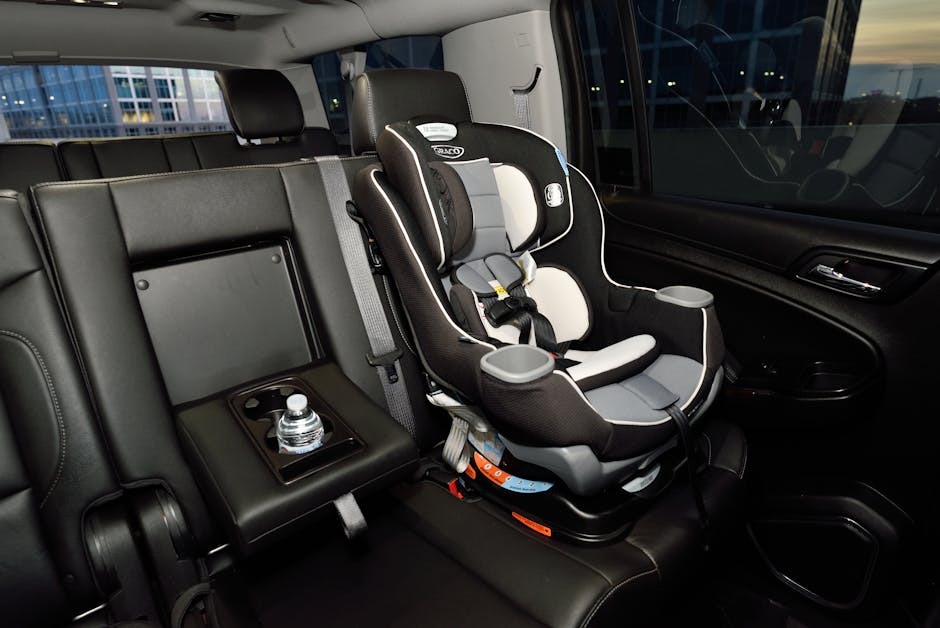
I’m going to get heat for this. People love Clek. They think because the Oobr is $300 and made of magnesium that it’s somehow ‘better.’ It’s a total scam. The Oobr is heavy as a boat—literally 20 pounds. If you aren’t using the LATCH system, that’s a 20-pound projectile sitting behind your kid’s head in a crash. Plus, the headrest is weirdly stiff. My kid hated it. I don’t care if it’s ‘tank-like.’ I’m not driving a tank; I’m driving to soccer practice. I refuse to recommend them to my friends because it’s just a status symbol for people who want to look like they care more than you do. It’s pretentious gear.
I used to think that more expensive meant more safety. I was completely wrong. A $60 Graco is just as safe as a $300 Clek if they both pass the same federal standards. The rest is just marketing and fancy cup holders. Speaking of cup holders, the ones on the Chicco fold in. That sounds like a small thing, but when you’re trying to fit a passenger in the middle seat, those two inches are everything. Total lifesaver.
The ‘wrong’ opinion on backless boosters
Here is my risky take: I think high-back boosters are overrated once the kid hits 6 years old. I know, I know. The ‘experts’ say keep them in the high-back as long as possible for side-impact protection. But have you ever tried to see out the back window of a sedan with two high-back boosters in the way? It’s a blind spot nightmare. I’d rather be able to see the car merging into my lane than have a slightly larger plastic wing next to my kid’s head. I switched my oldest to a backless booster at 6 because being a better driver is a safety feature too.
Installing some of these is like trying to fold a live alligator into a suitcase. If the seat is too complicated, you’ll get lazy. You’ll let the belt twist. You’ll skip the LATCH. That’s when things get dangerous. The best belt-positioning booster seat is the one that stays out of your way and lets the car’s safety systems do their job.
I might be wrong about the side-impact stuff, but I’ve driven 40,000 miles with kids in the back, and visibility has saved us more times than a plastic headrest ever could. Anyway, back to the point. The Chicco is the sweet spot. It’s about $100, the cover is actually machine washable (I’ve washed out a whole strawberry milkshake, trust me), and it doesn’t look like a spaceship.
It’s funny how much we worry about this. We spend weeks researching the ‘best’ seat, looking at crash test ratings and flame-retardant fabrics, and then we hand them an iPad and a bag of sugar and drive 80mph on the highway. We’re all just doing our best to mitigate the chaos. I still think about that day at IKEA sometimes. The feeling of hot pavement on my knees and the sheer panic of not being able to protect my kid. It’s a heavy weight to carry. I just want a seat that makes that weight a little bit lighter.
Is there even such a thing as a ‘perfect’ seat, or are we just buying peace of mind in $20 increments? I honestly don’t know.
Buy the Chicco KidFit. Forget the rest.