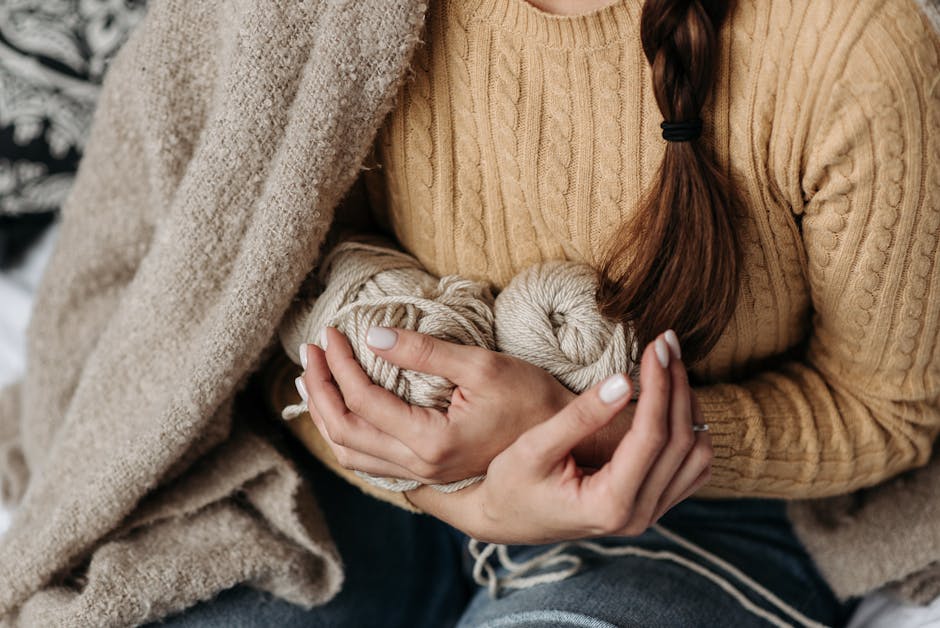
I spent $142.50 on a sweater’s worth of hand-dyed, buttery-soft merino wool three years ago, and by the second time I wore it out of the house, it looked like a felted dog bed. I was devastated. I’d spent forty-some hours knitting this thing in a coffee shop in Seattle, thinking I was making an heirloom. Instead, I made a sponge that attracted every piece of lint within a three-mile radius.
Softness is a trap. It’s the first thing we do in the yarn store—we grab the skein and rub it against our necks. If it’s soft, we buy it. This is a mistake. If you want a sweater that actually looks like a sweater after six months of wear, you have to stop buying the softest stuff on the shelf.
The superwash lie that everyone believes
I know people will disagree with me here, and they usually get pretty defensive about their laundry habits, but superwash wool is mostly garbage. There, I said it. We’ve been sold this idea that “machine washable” is the gold standard, but the process of making wool superwash involves either stripping the scales off the fiber with acid or coating it in a thin layer of plastic (polymer). It ruins the soul of the wool.
What I mean is—actually, let me put it differently. Wool is supposed to have friction. That friction is what keeps the stitches together and gives the garment structure. When you use superwash, you’re basically knitting with lubricated hair. It grows. You knit a medium, you wash it once, and suddenly you’re wearing a dress that hits your mid-thigh. It’s a nightmare for fit.
I once knit a cardigan out of a popular superwash brand—I won’t name names, but it rhymes with ‘Shmalabrigo’—and by the end of a week-long trip to Maine, the sleeves had grown four inches. I looked like a toddler wearing my dad’s clothes.
Total waste of time.
That time I tried to knit with cotton

I used to think that maybe the answer was just avoiding wool altogether if I wanted something crisp. I was completely wrong. In 2018, I decided to make a summer sweater out of 100% Pima cotton. I thought it would be breathable and sharp.
Cotton has zero memory. None. It doesn’t bounce back. Every time I sat down, the elbows of the sweater would bag out, and they stayed bagged out until I washed it again. By 2:00 PM every day, I looked like I’d been living in my car. It was heavy, too. The weight of the cotton pulled the shoulder seams down until the neckline was practically at my sternum. I ended up donating it to a thrift store in a fit of rage after it got a single snag that I couldn’t fix because the yarn had no ‘grip’ to hold the repair in place.
Anyway, the point is that fiber content isn’t just about how it feels on your skin; it’s about the physics of the garment. I digress. Let’s talk about what actually works.
The stuff that actually lasts (My 40-hour test)
I’ve become a bit of a nerd about pilling. I actually started tracking it. I wore three different sweaters for 40 hours of ‘active’ use—walking the dog, sitting at a desk, wearing a seatbelt—and then counted the pills in a 4×4 inch square under the arm.
- Brooklyn Tweed Shelter: 2 pills. (Targhee-Columbia wool, very toothy).
- Generic Superwash Merino: 14 pills. (Started looking fuzzy after hour 5).
- Lopi (Icelandic Wool): 0 pills. (But it’s basically a hair shirt).
If you want the absolute best balance of longevity and wearability, you want non-superwash, woolen-spun wool. Brands like Brooklyn Tweed or Rauma are doing it right. It feels a bit ‘crunchy’ in the skein, but once you wash it (by hand, don’t be lazy), it blooms into this beautiful, cohesive fabric that doesn’t pill and holds its shape for a decade.
I also have a weird, probably unfair hatred for Malabrigo Rios. I know, I know—the colors are stunning. But it’s too soft. It’s the ‘fast fashion’ of the hand-knitting world. It looks great on the shelf, but it’s a pill-fest within a month. I refuse to buy it anymore, even when the variegated blues start calling my name. I tell all my friends to avoid it for sweaters. Use it for a hat if you must, but keep it away from your torso.
The itch factor is mostly in your head
People say they can’t wear ‘scratchy’ wool.
I think most of us are just spoiled by cheap synthetic blends. A real wool sweater isn’t supposed to feel like a silk pajama top. It’s supposed to feel like outerwear. If you wear a thin t-shirt underneath, you won’t even notice the texture. Plus, the more you wear real, honest wool, the more it softens up naturally without losing its structure. It’s a long game.
Buy rustic wool. Wash it by hand in a sink with a little Eucalan. Lay it flat. Don’t touch it for two days.
That’s the whole trick.
I still wonder sometimes if I’m just becoming a grumpy old knitter who hates anything modern. Maybe there’s some new technology I’m missing that makes superwash actually stable? I doubt it, though. Every time I see a pilled-to-death sweater on the subway, I can almost smell the polymer coating from across the aisle. Is it weird that I can recognize yarn types on strangers? Probably.
Stick to the toothy stuff. Your future self will thank you.