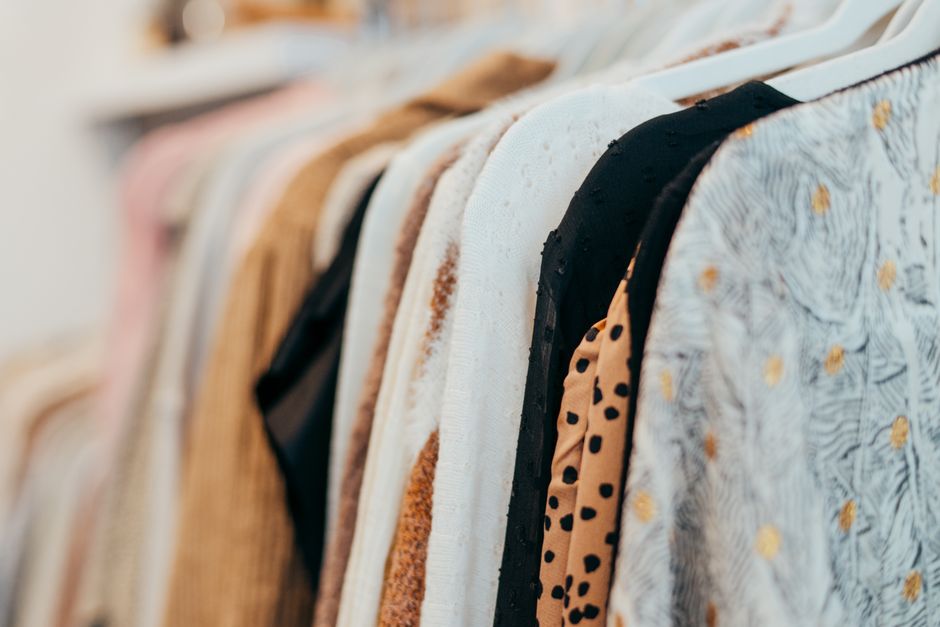
A coat can look expensive under warm shop lighting and still fail after one winter. Use five minutes to inspect the structure, fabric, lining, and fastenings before the price tag persuades you.
This is a construction check, not a brand ranking. Seasonal versions of named coats can change, and prices vary by country, fabric content, and sale timing.
The five-minute coat quality check
Verdict: inspect the coat in a fixed order. Start with the outside, then test the inside, and finish with the buttons and hem. This avoids getting distracted by a soft fabric or a familiar label.
Use the first two minutes on visible structure
| Check | What to do | Good sign | Walk-away sign |
|---|---|---|---|
| Shoulders | Hold the coat on a hanger and view it from the front and back. | The shoulder line sits smooth without a ridge or hollow. | A raised bump, twisting sleeve, or shoulder that collapses away from the body. |
| Side seams | Button the coat and look down both sides. | The seams fall straight and match at the hem. | The coat pulls across the chest or the hem swings sharply to one side. |
| Buttons | Pull each button gently and inspect the underside. | Firm stitching, a small shank, and no loose thread. | A button moves visibly, has only two loose passes of thread, or strains the fabric. |
| Cloth | Pinch the fabric, then release it. | Dense recovery, even surface, and no thin shiny patches. | Hard plastic feel, weak recovery, or uneven fuzz around the pockets. |
Use the last three minutes on named examples
Take the same test to a J.Crew Ludlow Topcoat, a Uniqlo +J Wool Blend Chesterfield Coat, or a COS Double-Faced Wool Coat. These are useful comparison examples, not automatic winners. Seasonal cuts and fiber mixes change, so read the current label instead of trusting the product name. Check the wool percentage, lining fiber, button material, and seam finish. A clean label does not excuse a loose button; a lower-priced coat can still pass the construction test.
Shoulder seams and lining reveal the real build

Are shoulder seams the fastest quality test?
Yes: start at the shoulders. The shoulder carries the coat’s shape, so a poor seam creates problems everywhere else. Put the coat on, close the front, and stand naturally with your arms at your sides; the seam should sit near the point where your shoulder ends, the sleeve should hang without twisting, and the chest should remain smooth when you move one arm forward. A small fit issue can come from the wrong size, but rippling that remains after you try a larger or smaller size points to weak patterning or poor pressing.
What should a lining feel like?
The lining should move smoothly over a shirt or sweater, with enough ease at the back and shoulders for normal movement. Look inside the sleeve and tug the lining gently; it should not pull the outer cloth into a tight wrinkle. A partial lining is not automatically cheap, especially on a lightweight spring coat, but an unlined heavy coat needs very neat internal seams because your clothes will rub directly against them. Reject lining that puckers, hangs below the outer hem, catches on a sleeve, or makes a crackling noise when you move. For a structured winter coat, a smooth lining and a well-shaped shoulder matter more than a glossy brand label.
Cloth weight is useful, but it is not a quality score
My recommendation is simple: buy the cloth that suits your climate, not the heaviest coat you can lift. Weight tells you something about warmth, drape, and likely durability, but it cannot prove fiber quality or construction. A dense 700-gram wool coat may feel substantial and still have weak seams. A lighter 500-gram cashmere-wool blend may feel luxurious but need more careful wear. The right question is what the cloth does under pressure.
Test density, recovery, and surface
Press one hand behind the fabric and view it under direct light. You should not see large patches of light through a winter coat’s main body unless the design intentionally uses a loose weave. Pinch the cloth near the pocket, release it, and watch the fold disappear. Slow recovery can signal a loose weave, excess finishing, or fabric that will bag at high-friction points. Rub a hidden section lightly with your thumb for five seconds. A few loose fibers are normal; a visible fuzzy halo or shedding pile is a warning.
Check the fabric label before making a judgment. Wool gives warmth, resilience, and natural shape recovery, while polyester can improve strength and reduce cost. A blend is not a flaw. The problem is paying a premium for a thin synthetic shell with vague fiber labeling. Look for exact percentages. If the tag only says wool-like, premium touch, or luxury fabric, treat that as marketing rather than evidence.
Match weight to the way you will wear it
For a cold commute, a dense 600-to-800-gram wool coat can hold its shape and block more wind than a thin fashion coat. For indoor-heavy days, a 400-to-600-gram layer may be easier to wear and less likely to become a bulky costume. A heavy coat also needs stronger buttons and reinforced pocket openings because gravity and repeated movement put more stress on the front.
Do not confuse weight with insulation. A thick, loosely woven coat can feel heavy while letting wind through. A lighter coat with a dense weave and a good lining can perform better. For that reason, cloth weight should support your decision, not make it for you.
Reject these coat flaws before you pay
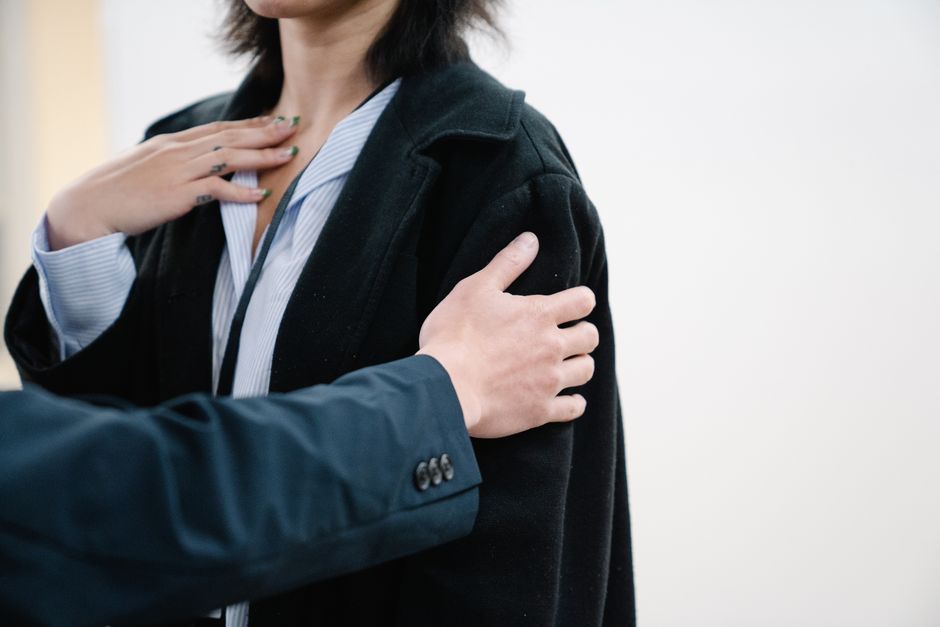
Do not negotiate with structural defects. A discount can justify a missing belt or an unusual color, but it rarely justifies a body seam that twists or a front closure that pulls.
Five defects that deserve a firm no
- Twisted sleeves: Stand with your arms relaxed. If the sleeve seam spirals toward the front or back, the coat may feel uncomfortable every time you move.
- Chest strain: Button the coat and raise both arms slightly. Horizontal stress lines across the chest mean the coat is too small, badly cut, or both.
- Loose button foundations: A button that lifts more than a few millimeters under light pressure will likely detach when the coat catches on a bag strap.
- Uneven hems: Check the coat on a flat hanger. A hem that rises sharply at one side can point to poor pressing, an altered garment, or fabric distortion.
- Shiny pressure marks: Gloss around the pockets, elbows, or front edge may signal poor finishing or heavy shop handling. It often becomes more visible after wear.
When a flaw is acceptable
Minor loose threads at an inner seam can be trimmed. A slightly long sleeve can be altered if the cuff has enough allowance. A missing spare button is inconvenient but not a reason to reject an otherwise sound coat. The line is simple: accept cosmetic repairs only when the structure remains straight, the cloth is sound, and the alteration cost fits the final price. A $300 repair on a $350 coat is not a bargain.
Coat quality questions shoppers ask

Is a fully lined coat always better?
No. Full lining usually improves ease of movement and protects the outer cloth, so it is the better choice for a structured winter coat. An unlined or half-lined design can feel lighter and breathe better in mild weather. Judge the lining against the coat’s purpose, then inspect whether the inside seams are clean and secure.
Should expensive buttons be made from horn?
Not necessarily. Horn, corozo, metal, and high-quality resin can all work. The attachment matters more than the label. A button should sit flat, use firm thread, and have enough space for the cloth thickness. For a heavy coat, a small shank or reinforced backing is more useful than a decorative material claim.
What is the clearest sign that a coat is not worth the price?
The clearest sign is a mismatch between the price and the construction: a high ticket paired with thin cloth, vague fiber content, loose buttons, uneven seams, or a lining that fights your movement. Brands such as J.Crew, Uniqlo, and COS offer useful reference points, but a label cannot replace the five-minute inspection. If the coat fails two structural checks, leave it on the rack, even when the fabric feels soft and the discount looks dramatic.