
You find a soft sweater on sale, check the price, and assume the expensive one must be warmer. Then the first wash leaves it smaller, the sleeves stretch, or the fabric pills after three wears. The label may say wool, cashmere, or a luxury-sounding blend, but those words do not tell the whole story. This knitwear buying guide breaks down fiber, construction, care, price, and common failure points so you can buy the right sweater for a real wardrobe.
How Wool, Cashmere, and Blends Create Warmth
My verdict: choose fiber structure before softness. Warmth comes from trapped air, not from a luxury label. Wool fibers have a natural crimp that creates small air pockets around the body. Cashmere fibers are finer, so they feel smoother against the skin and provide good warmth at a lower garment weight. A thick acrylic blend can also feel warm because the knit traps air, even though the fiber itself has less natural moisture control.
Why fiber diameter changes comfort
Wool fiber diameter is measured in microns. Coarse wool can feel prickly because thicker fibers bend less easily and press against the skin. Fine merino wool, often around 17.5 to 19.5 microns, usually feels smoother. Cashmere often uses fibers below 19 microns, which explains its soft hand feel. Softness does not prove durability. Fine fibers can break, fuzz, or pill faster when the garment rubs against a coat, seat belt, or handbag.
Why knit structure changes insulation
A dense, compact knit blocks wind better than a loose, open knit. A 2-ply yarn twists two strands together, improving shape retention compared with a delicate single-ply yarn. Ribbed cuffs reduce heat loss at the wrists, while a high collar protects the neck without adding much weight. For a cold commute, a medium-gauge merino sweater with a firm knit often gives better daily performance than a thin cashmere sweater. For indoor wear, thin cashmere wins on softness and low bulk.
Read warmth as a combination of fiber, yarn count, knit density, and fit. The fiber name alone is not a thermal rating.
How to Read a Knitwear Fiber Label

The label is your first coverage comparison table. Treat each percentage as evidence, not decoration. A sweater marked 100% cashmere tells you the main fiber, but it does not reveal the ply, weight, origin, finishing process, or seam quality. A 70% merino and 30% nylon blend may outperform a 100% merino sweater for repeated wear because nylon reinforces high-friction areas. The clear buying rule is to match the label to the job.
Check the fiber percentage and yarn count
- Find the fiber percentages first. A label saying 90% wool and 10% nylon is different from one saying 50% wool, 30% acrylic, and 20% polyester.
- Look for merino, lambswool, cashmere, alpaca, cotton, silk, nylon, and viscose. Each changes warmth, stretch, shine, and care.
- Look for 1-ply, 2-ply, or heavier construction when the retailer provides it. More plies often mean a firmer, more stable fabric.
- Check the care label before buying. Dry-clean-only care adds time and cost to the ownership price.
Inspect the garment, not just the label
Hold the sweater up to light. Thin patches around the elbows, uneven loops, and loose seams signal weak construction. Stretch the ribbed cuff gently. It should return to shape instead of staying open. Check the shoulder seam and underarm join for tidy stitching. A sweater that twists on the hanger may twist more after washing.
Insurance comparison sites use AM Best ratings and J.D. Power scores to separate financial strength from customer experience. Knitwear has no equivalent universal score, so you must build the same two-part check yourself: fiber and construction for performance, then reviews and return terms for buyer risk. A high price is not proof of either.
When a Blend Beats Pure Wool or Cashmere
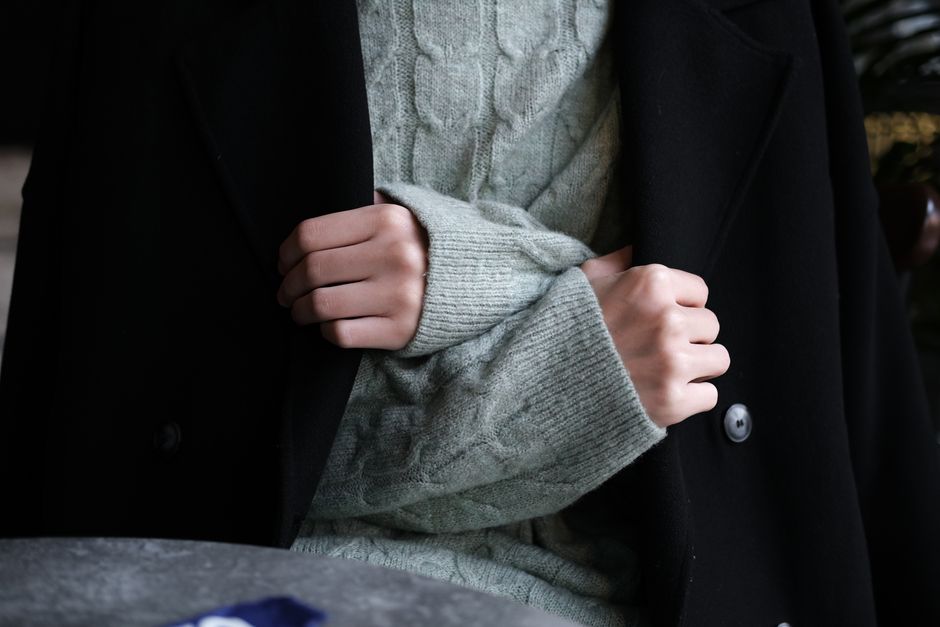
A well-designed blend is often the smartest choice for a sweater you will wear every week. Pure cashmere feels excellent, but it can pill at the sides and needs gentler handling. Pure wool manages moisture well, yet some people dislike the texture and many fine knits lose shape when washed badly. Adding 10% to 30% nylon can strengthen cuffs, shoulders, and elbows. Adding cotton can reduce heat and make a sweater more comfortable indoors. Adding silk can improve drape and surface smoothness, but it may reduce the thick, springy feel people expect from winter knitwear.
The failure mode is buying a blend without checking what the non-luxury fibers do. A 60% wool and 40% acrylic sweater may cost less and resist shrinking, but acrylic can hold odor and may develop static. A cashmere-polyamide blend can last longer than fragile pure cashmere, but it may not feel as soft or breathable. A viscose blend can create a fluid shape, yet the fabric may stretch at the elbows.
Buy a blend when the garment faces friction, frequent washing, travel, or long hours at a desk. Buy pure cashmere for low-friction wear, short outings, and a softer hand feel. Do not buy cashmere for backpack straps, daily cycling, or a job that requires repeated contact with rough surfaces. Do not buy an all-wool sweater for someone who already knows wool irritates their skin. The right tradeoff is the one that prevents the garment from becoming an expensive closet resident.
Knitwear Buying Mistakes That Cost More Later
Most knitwear losses come from care and fit mistakes, not from choosing the wrong animal fiber. Use this short pre-purchase checklist before the receipt leaves your hand.
- Buying by softness alone: Softness can come from finishing treatments. Examine the knit density, seams, cuffs, and recovery after gentle stretching.
- Ignoring shoulder fit: A shoulder seam that hangs several centimeters past your shoulder creates drag at the sleeve and speeds up stretching.
- Choosing a loose knit for a high-friction job: Open stitches snag more easily on jewelry, bag hardware, desks, and car seat belts.
- Assuming dry-clean-only means superior: It often means higher ownership cost. If you want frequent wear, choose a washable merino or cotton blend when the label supports it.
- Washing before reading instructions: Use cool water, mild detergent, and a flat drying surface when the label permits hand washing. Never hang a wet wool or cashmere sweater from the shoulders.
- Trusting vague sustainability claims: Ask for fiber percentages, certification details, and country of manufacture. A green phrase without a material breakdown tells you little.
- Skipping the return policy: Fit varies by brand and knit structure. Keep tags attached until you check sleeve length, shoulder position, and body tension over a shirt.
Also check pilling risk before purchase. Rub the inside of the forearm lightly against the side seam for a few seconds. A few loose fibers are normal in a new soft knit; a dense halo appearing immediately suggests a surface likely to fuzz quickly. Reviews can help, but treat them as customer evidence rather than a formal rating system.
Which Knitwear Should You Buy for Your Wardrobe?
Is wool better than cashmere for daily wear?
Yes. For commuting, travel, and repeated outfits, choose fine merino or a merino-nylon blend. It handles moisture, holds shape, and costs less to replace. The Icebreaker Merino 200 Oasis Crewe is the stronger performance choice when you need a base layer. The Uniqlo Extra Fine Merino Crew Neck is the better low-cost office layer.
Is cashmere worth the higher price?
Yes, for low-friction comfort and polished indoor dressing. NAADAM The Original Cashmere Sweater is the clearest value pick among the named options because its price stays below many luxury cashmere basics. Buy it in a classic neutral and rotate it instead of wearing it on consecutive days. That gives the fibers time to recover and reduces surface wear.
When should you skip animal fibers?
Skip wool and cashmere when allergies, ethical concerns, repeated machine washing, or rough outdoor use dominate the decision. Patagonia Better Sweater fleece offers easier care and strong casual durability, though it does not manage moisture like merino and can feel warmer indoors. A cotton blend works better for mild climates where wool traps too much heat.
| Priority | Buy this | Why |
|---|---|---|
| Lowest useful price | Uniqlo Extra Fine Merino | Fine wool at roughly $40 |
| Active travel | Icebreaker Merino 200 | 200-weight merino manages temperature changes |
| Soft luxury feel | NAADAM cashmere | 100% cashmere at an accessible reference price |
| Easy casual care | Patagonia Better Sweater | 100% recycled polyester fleece and full-zip utility |
The compressed recommendation is simple: buy merino for workhorse wear, cashmere for quiet comfort, and a blend or fleece when durability and easy care matter more than fiber prestige.