
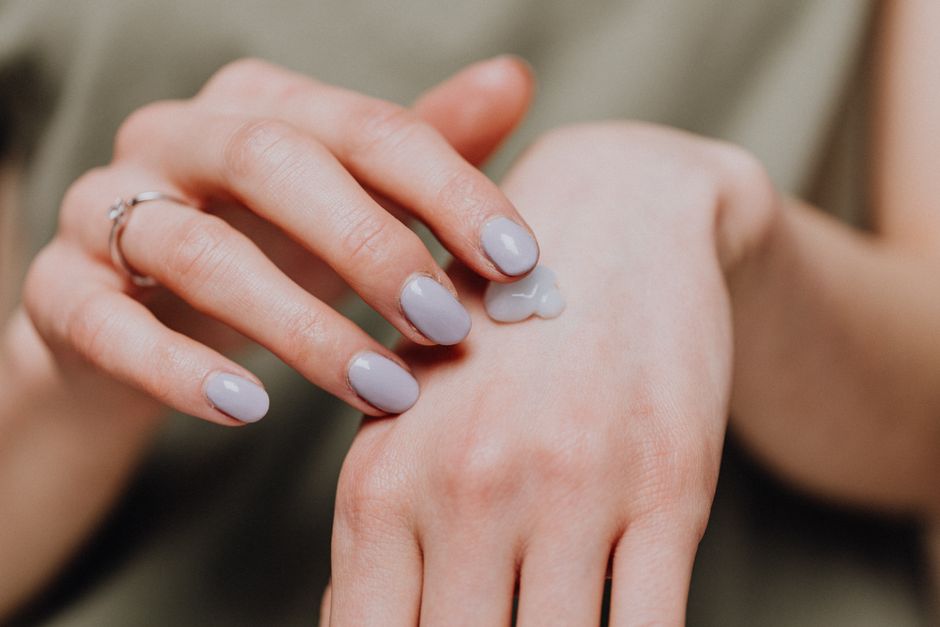
The best cold-weather routine under makeup is thinner than most people expect: a gentle hydrating layer, a small amount of moisturizer, sunscreen, and enough time for each layer to settle. Heavy cream is usually the reason foundation slides, pills, or turns glossy by midday. I get the smoothest winter makeup when I treat dry skin and surface shine as two separate problems.
Why winter hydration turns shiny under makeup
Cold air pulls water from the skin
Winter creates a difficult mix for the face. Outdoor air is cold and often dry, while indoor heating lowers humidity even more. Water leaves the outer layer of skin faster, so the face feels tight, rough, or flaky. The skin may respond by producing more oil, but that oil does not replace water. It sits on the surface while dry patches remain underneath.
Makeup makes the contrast easier to see. Foundation catches on flakes around the nose, mouth, and eyebrows, then separates over the oily areas. Adding another thick cream can soften the flakes for a few minutes, but it also gives foundation a slippery surface. That is how a face can feel dry and look shiny at the same time.
Shine often comes from too many layers
Most winter makeup problems start with stacking products that do the same job. A hydrating toner, essence, serum, rich cream, facial oil, primer, and dewy foundation may each look reasonable alone. Together, they can leave a heavy film that never fully sets. The issue is not hydration itself. The issue is excess product sitting between skin and makeup.
My verdict: aim for comfortable skin, not a wet-looking surface. Use humectants to attract water, a modest moisturizer to reduce water loss, and sunscreen as the final skincare layer. If the face still feels tight after ten minutes, add a little more moisturizer only to the dry zones instead of coating the whole face.
How to build a winter skincare routine under foundation

The five-minute layering order
- Cleanse lightly. Use lukewarm water and a low-foam cleanser in the morning. If your skin is not oily, rinsing with water may be enough. Hot water can make tightness worse before makeup even starts.
- Add water first. Apply a hydrating serum or lotion to slightly damp skin. Look for glycerin, panthenol, beta-glucan, or hyaluronic acid. One thin layer is enough; a sticky face does not mean the skin received more useful moisture.
- Seal the dry areas. Press a pea-sized amount of moisturizer over the cheeks, around the mouth, and under the eyes. Keep the forehead and sides of the nose lighter if those areas become shiny.
- Use sunscreen. Apply about two finger lengths of broad-spectrum SPF 30 or higher to the face and neck. Let it sit for several minutes before makeup.
- Prime only where needed. Use a smoothing primer on pores or a mattifying primer on the center of the face. Do not spread a full face of primer automatically over rich skincare.
When to apply foundation
Give the final skincare layer at least five minutes to settle. If sunscreen still feels slick, press a clean tissue over the cheeks and forehead instead of rubbing. Apply foundation in thin sections, starting at the center of the face and moving outward. A damp sponge can soften edges, but it can also lift sunscreen if you keep bouncing over the same spot.
The winning routine is short and targeted. Two thin skincare layers usually perform better under makeup than four rich ones, especially when the foundation already contains emollients or a radiant finish.
Which winter moisturizers sit best under makeup?
A practical comparison for dry, combination, and sensitive skin
I prefer lightweight lotions and fluid creams for daytime winter makeup because they give the barrier support I need without leaving a thick layer. The products below are widely available, and their package sizes make it easier to compare how much formula you are actually using. Prices vary by retailer, so texture and finish matter more than chasing the cheapest jar.
| Product | Size | Texture and useful details | Best makeup match |
|---|---|---|---|
| La Roche-Posay Toleriane Dermallergo Fluide | 40 ml | Light fluid; designed for sensitive skin; low-residue finish | Natural or satin foundation |
| CeraVe PM Facial Moisturizing Lotion | 52 ml | Niacinamide, ceramides, and hyaluronic acid; lotion texture | Medium-coverage foundation |
| Vanicream Daily Facial Moisturizer | 89 ml | Ceramides, squalane, and hyaluronic acid; simple cream-lotion feel | Dry or easily irritated skin |
| Embryolisse Lait-Crème Concentré | 75 ml | Rich cream texture; more slip and glow | Dry skin with thin matte foundation |
| First Aid Beauty Ultra Repair Cream | 56.7 g | Dense cream with colloidal oatmeal; strongest comfort for rough patches | Spot use under makeup |
My clear pick for most people is Vanicream Daily Facial Moisturizer. The 89 ml tube gives dry skin useful cushioning, but the lotion spreads thinly enough for foundation. For very sensitive skin, La Roche-Posay Toleriane Dermallergo Fluide is the safer daytime choice because it feels less heavy. I would not use First Aid Beauty Ultra Repair Cream across the entire face before makeup; it works better on flaky cheek patches or as a night cream.
When a richer cream is the wrong choice
Do not buy a rich moisturizer just because winter makes your skin feel tight. If your makeup becomes shiny within an hour, the formula may be too occlusive for daytime use, or you may be applying more than your face can absorb before foundation. Keep the richer product for nighttime or use it only on the spots that crack.
The fastest way to stop pilling and midday shine

The real culprit
My strongest opinion is simple: stop rubbing your skincare into your face once it has started to set. Pilling often comes from friction between silicone-heavy formulas, sunscreen film, and layers that have not dried; adding more primer usually makes the problem worse, so use thin amounts, wait five minutes, and press makeup on instead of dragging it across the skin.
A short correction list
- Use less serum than you think you need: two or three drops usually cover the face.
- Measure moisturizer by area, not emotion: a pea-sized amount for the dry zones is a useful starting point.
- Do not mix sunscreen with foundation; mixing can reduce the evenness of the protective film.
- Skip facial oil under makeup when foundation slides across the cheeks or breaks apart around the nose.
- Blot excess skincare with tissue before foundation, especially along the hairline and sides of the nose.
- Wait longer after sunscreen when the weather is damp or the formula feels glossy.
- Do not scrub flakes on makeup day; exfoliation can leave the skin more reactive and harder to cover.
If the same base still pills after these changes, replace one product rather than rebuilding the whole routine. The most useful test is to apply each layer to one cheek, wait ten minutes, and compare the finish before adding foundation.
Winter skincare questions that change the makeup result
Should dry skin use a matte primer?
Yes, but only on the center of the face. A matte primer across dry cheeks can make foundation look cracked, while a small amount around the nose and forehead can control shine. For a balanced finish, keep the cheeks moisturized and use primer as a targeted tool. The best winter makeup is rarely fully matte or fully dewy; satin skin looks more natural and needs less powder.
Is CeraVe PM better than a heavier cream under makeup?
For most combination or normal-dry skin, yes. CeraVe PM Facial Moisturizing Lotion has a thinner spread than a dense balm and includes ceramides, niacinamide, and hyaluronic acid. It is a strong everyday choice when you need comfort without a greasy finish. If your skin is peeling or stinging, Vanicream Daily Facial Moisturizer is the better pick because its cream-lotion texture gives more cushion.
Can I use a facial oil before foundation?
You can, but I would not make it a standard winter step. Oil is useful at night or on a tiny flaky patch, yet it can keep sunscreen and foundation from forming an even film. If you need oil every morning to feel comfortable, your cleanser may be too harsh or your moisturizer may be too light. Fix that base problem first.
What should I do when foundation still clings to flakes?
Remove the makeup gently, apply a thin hydrating layer, and wait before trying again. Do not add powder to hide texture. Powder reduces shine but makes raised flakes more visible. For cold-weather makeup, healthy flexibility matters more than a perfectly flat surface.
The single most important takeaway is to use enough moisture to keep skin comfortable, then stop layering before the face becomes slippery.