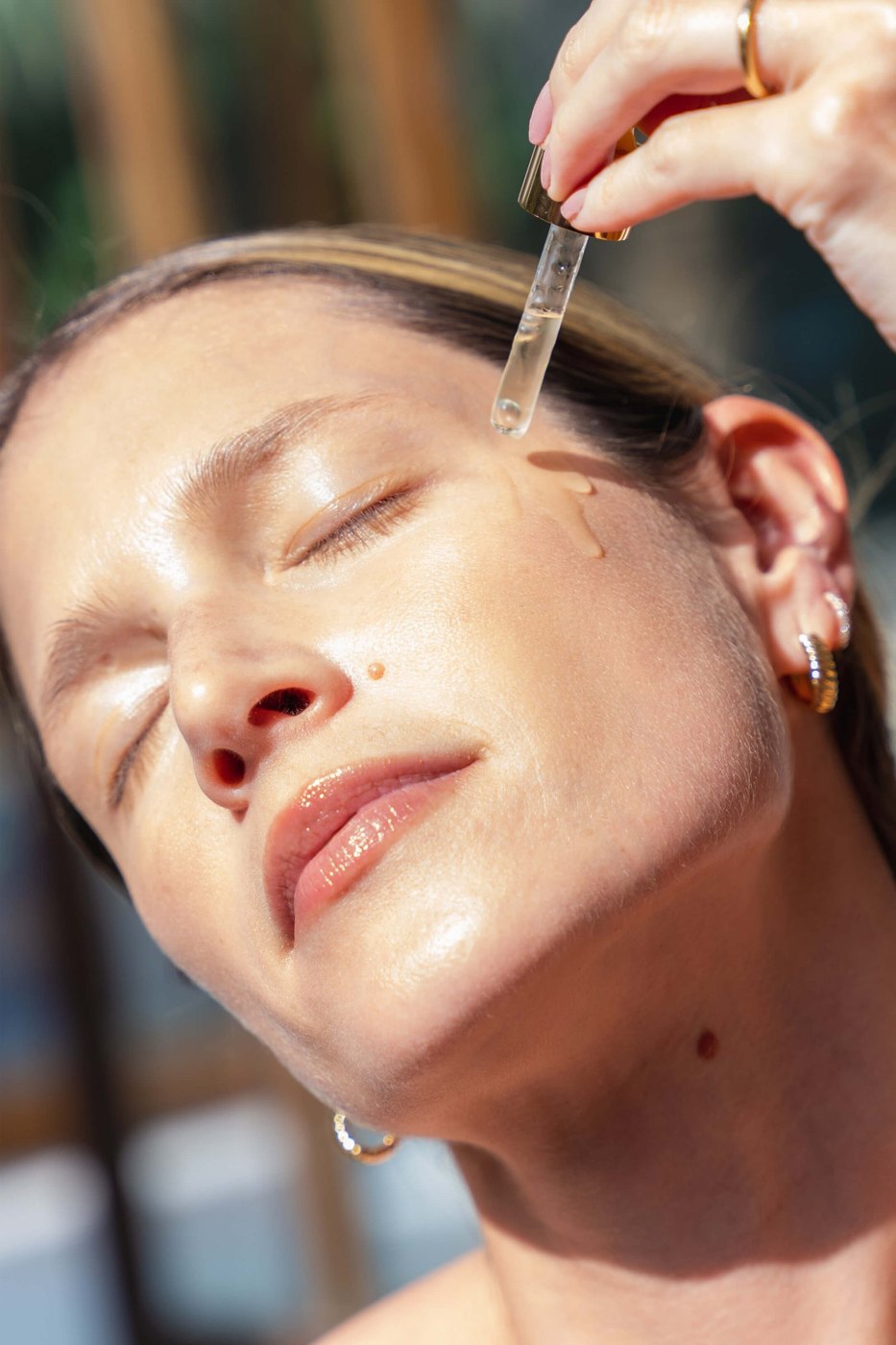

You have ten minutes before work, the forecast says 88°F, and your face will move from an air-conditioned office to a sweaty sidewalk by lunch. The question is not which base looks best in a studio photo. It is which one gives you enough coverage without turning into a slippery layer by 2 p.m. For most ordinary summer days, tinted moisturizer is the better buy. Foundation wins when you need a more even canvas, longer visual polish, or reliable coverage for redness and dark spots.
What changes between tinted moisturizer and foundation in summer?
Coverage is the real dividing line
Tinted moisturizer starts with hydration and adds a small amount of pigment. Foundation starts with pigment and may add skincare ingredients. That difference matters more than the label. A tinted moisturizer can soften uneven tone, but it will not reliably hide active blemishes or strong discoloration. Foundation gives you more control because you can apply a thin layer everywhere and add coverage only where needed.
| Factor | Tinted moisturizer | Foundation |
|---|---|---|
| Typical coverage | Sheer to light | Light to full, depending on formula |
| Best summer finish | Natural or dewy | Natural, satin, matte, or radiant |
| Heat risk | Can slide if very emollient | Can crease, cake, or separate when layered heavily |
| Touch-up difficulty | Usually easy with fingers | May need sponge, powder, or careful blending |
| Best use | Even tone and casual daily wear | Photos, events, redness, and stronger coverage |
Heat changes the wear test
Summer skin often produces more sweat and oil, while air conditioning can strip moisture from the surface. A very dewy base may look fresh for one hour and greasy later. A matte foundation may survive humidity but emphasize dry patches around the nose. The strongest choice is the formula that reaches your target finish with the fewest layers. My verdict: choose tinted moisturizer for normal daytime errands, and choose foundation when coverage is the job rather than a side benefit.
How to choose your summer base in five minutes
Start with the problem you need to solve, not the product category printed on the bottle. A cheaper product that fails by noon costs more than a better-matched formula you wear three times a week.
The five-question filter
- How much needs hiding? If you mainly want a more even tone, start with tinted moisturizer. If redness, acne marks, or melasma need real coverage, start with foundation.
- How long will you wear it? For two to four hours, comfort matters most. For an eight-hour workday or outdoor event, look for transfer resistance and a finish that does not rely on heavy shine.
- What does your skin do at noon? Dry skin usually handles a flexible, hydrating base better. Oily skin often needs a thinner formula and strategic powder around the nose and forehead.
- Will you reapply sunscreen? A makeup base with SPF does not replace a separate sunscreen layer. Plan for a sunscreen touch-up method that works over makeup.
- Do you need a shade match or a shade blur? Foundation rewards a close undertone match. Tinted moisturizer can forgive a slightly imperfect match because the pigment is lighter.
The ten-minute wear test
Apply your normal skincare, wait five minutes, then place the base on one side of your face. Do not judge it immediately. Check the finish after ten minutes, after a brisk walk, and again under direct daylight. Look beside your nose, around your mouth, and under your eyes. Those areas reveal separation faster than your cheeks. My verdict: buy the formula that still looks even after movement, not the one that looks most impressive during the first thirty seconds.
My clear pick for ordinary summer days: tinted moisturizer
For everyday summer skin, I would spend on tinted moisturizer before foundation. It solves the common problem—uneven tone—without forcing you to wear a full cosmetic layer on a hot day. That does not make every tinted moisturizer a good value. The formula still needs a usable shade range, a finish that matches your skin, and enough wear resistance for your schedule.
Best options for dry or normal skin
bareMinerals Complexion Rescue Tinted Moisturizer is the strongest practical pick for dry skin: it lists mineral SPF 30, hyaluronic acid, sheer-to-light coverage, and 20 shades. Its listed price is $39.50, so the value depends on using it often rather than treating it as a substitute for sunscreen. Saie Slip Tint is better for shoppers who want a dewy finish and mineral SPF 35 from non-nano zinc oxide; it comes in a 1.35-ounce tube and 14 shades.
- Apply sunscreen first and allow it to set before adding tint.
- Use fingers for the thinnest layer and a damp sponge where you want less shine.
- Keep powder limited to the center of the face so the cheeks do not look flat.
Best option for combination skin and humidity
Fenty Beauty Eaze Drop Blurring Skin Tint is my clear winner for combination skin. The official listing gives it 25 shades, 32 mL of product, light-to-medium buildable coverage, and claims of sweat, humidity, and transfer resistance. The listed price is $41. It is still a skin tint, not a full-coverage foundation, but the blurring effect gives it more visual payoff than many sheer formulas. My verdict: choose bareMinerals for dry comfort, Saie for a luminous mineral finish, and Fenty for the most polished summer tint.
When foundation earns its higher price
Foundation earns its fee when you need the base to do a specific job: cover visible redness, hold up for photographs, match a formal outfit, or stay present through a long event. The winner here is NARS Light Reflecting Foundation. Its official product information describes medium, buildable coverage, a natural radiant finish, and a 46-shade range. The listed price is $55. Apply a pearl-sized amount from the center of the face outward, then add a small second layer only where needed.
Why the extra coverage can be worth it
A foundation can reduce the amount of concealer you need. That matters in heat because several separate creamy layers often move more than one thin, well-matched base. NARS is the better choice for an evening wedding, a professional headshot, or persistent redness that a tint leaves visible. The tradeoff is maintenance: a foundation usually asks for more careful prep, more exact shade matching, and a touch-up plan.
When foundation is a bad buy
- Do not buy it for a two-hour coffee run if you dislike the feel of makeup.
- Do not choose a matte formula to fix oil when your skin is already dehydrated.
- Do not assume SPF in foundation replaces dedicated sunscreen.
- Do not finance a $55 bottle just because a checkout screen offers installments.
For the money test, compare the cash price first. A $39.50 tint or $55 foundation has no APR when paid upfront. A financing plan may show a 0% promotional APR, while standard purchase APRs can range from roughly 20% to 36% and late fees may run from $0 to $15 or more, depending on the provider. I would skip financing for either product. This is not financial advice, but a complexion product is a poor reason to accept a fee or carry a balance.
Summer base questions with direct answers

Is tinted moisturizer enough for a full workday?
It is enough for a normal office day if your goal is even tone rather than full concealment. Apply a thin layer over sunscreen, wait ten minutes, then blot oil instead of adding more product. If the tint disappears around the nose by lunch, use a small amount of concealer there rather than replacing the whole base with heavier foundation. That keeps the finish lighter and reduces midday buildup.
Does tinted moisturizer look better on mature or dry skin?
Usually, yes, because sheer pigment and flexible hydration are less likely to collect in fine lines. The finish still depends on the formula. A thick, glossy tint can emphasize texture by reflecting light, while a natural finish may look smoother. Use less skincare underneath, give each layer time to settle, and press—not rub—the base into dry areas.
Which should you buy for an outdoor event?
Choose foundation if you need dependable coverage for photos, then use a separate sunscreen and a light layer of powder only where sweat breaks through. Choose tinted moisturizer for a relaxed daytime event where skin-like texture matters more than perfect coverage. For the opening scenario—an 88°F office-to-sidewalk day—the tinted moisturizer is the better decision: lighter on the skin, faster to apply, and easier to repair before lunch.