
The right jeans should stay in place when you walk, give your thighs room when you sit, and finish at a deliberate point above or on your shoe. If you need a belt to keep them up, feel pulling across the seat, or see a messy stack at the ankle, the pair should go back. Use the measurements and try-on checks below before you remove the tags.
What a Good Jeans Fit Should Feel Like
A useful denim fit starts with movement, not a mirror pose. Jeans need enough structure to hold their shape, but they should not fight your body at the waist, seat, or upper leg. The waistband should touch your body all the way around without digging in. You should be able to slide two fingers inside it, but not make a loose fist.
Check the rise from waist to crotch
Rise is the distance from the crotch seam to the top of the waistband. A low rise sits closer to the hips and can feel restrictive when you sit. A mid rise usually lands around the natural waist-to-hip area and works as the safest starting point for everyday wear. A high rise covers more of the stomach and often gives better back coverage, but it should not press into the ribs when you bend.
Read the seat and thigh together
The back pockets should lie flat instead of pulling apart or forming deep horizontal wrinkles. At the front thigh, fabric should skim the leg with enough space for a pinch of roughly 1 inch on each side. More room is useful for muscular thighs, but too much fabric creates diagonal folds from the crotch to the knee.
| Fit area | Good sign | Return sign |
|---|---|---|
| Waist | Two fingers fit inside; no belt needed | Waistband gaps or cuts into skin |
| Rise | Crotch seam sits smoothly without pressure | Pulling, sagging, or exposed back when seated |
| Thigh | You can sit and climb stairs freely | Whiskering pulls toward the crotch |
| Hem | Break matches the shoe and cut | Extra folds hide the ankle or drag on the floor |
The clearest verdict is simple: keep jeans that feel stable and relaxed during movement, not just jeans that look acceptable while standing still.
How Rise Changes Comfort and Proportion

Rise changes more than coverage. It sets the visual starting point of the outfit and controls where the waistband meets your torso. For most shoppers, a mid rise is the best first try because it handles sitting, walking, and tucked or untucked tops with fewer problems. A high rise is the stronger choice when you want a defined waist or more coverage at the back. Low rise only makes sense when the waistband stays secure during movement and does not force you to adjust it all day.
Choose low, mid, or high rise by movement
Try sitting for two minutes. If the waistband rolls, the rise is probably too short for your body or the jeans are too tight through the hip. If the crotch drops and the seat looks loose, the rise may be too long. Neither problem gets solved by wearing a belt. A belt can close a small waist gap, but it cannot fix the wrong distance between the waistband and crotch.
Use the waistband position to balance an outfit
A higher waistband can make a short top look intentional and can lengthen the visual line of the legs. A lower waistband creates a longer torso line but needs a top that stays put. Avoid choosing rise only by size number because two jeans marked size 30 can place the waistband at very different points. Measure a pair that already fits well from crotch seam to the top edge, then compare that measurement with the new pair.
Verdict: start with mid rise for a reliable daily jean, choose high rise when back coverage and waist definition matter most, and reject low rise if it shifts when you sit, bend, or reach.
How to Judge Thigh Room Without Guessing
Thigh room is where many jeans fail. A pair can fit the waist and still feel wrong because the upper leg has no space for walking, sitting, or climbing stairs. Tight thigh fabric also changes the way the denim hangs below it. Instead of falling cleanly from the hip, the leg twists or pulls toward the knee. That is a fit problem, not a styling problem.
Run three movement tests
First, sit in a chair with both feet flat. Your thighs should not feel trapped against the front rise, and the pockets should not gape. Second, walk at a normal pace and climb one flight of stairs. Watch for fabric pulling toward the crotch or diagonal lines stretching across the front thigh. Third, squat halfway or kneel carefully. The jeans do not need to feel loose, but they should let you move without sharp pressure at the hip crease.
Know the difference between stretch and extra room
Stretch denim can hide a poor cut in the fitting room. A fabric with 1 to 2 percent elastane may feel comfortable for ten minutes, then loosen at the waist after several hours. Rigid denim usually feels firmer at first and changes more slowly with wear. Neither fabric makes a too-small pair correct. If you need to hold your breath to button the jeans or the front pockets flare open, size up or choose a roomier cut.
Read wrinkles as evidence
Horizontal wrinkles across the upper thigh usually signal tension. Diagonal wrinkles running from the crotch toward the outer hip can signal that the thigh or seat lacks space. Excess vertical folds often mean the leg is too wide for the body or the denim is pooling because the hem is too long. Look at the jeans from the front, side, and back. One flattering angle is not enough.
The best daily fit leaves a little breathing room at the thigh while keeping the fabric close enough to retain a clean line. If the waist fits but the thighs do not, do not keep sizing up indefinitely. Try an athletic, relaxed, or straight cut with a smaller waist-to-thigh ratio.
The Five-Minute Try-On Checklist
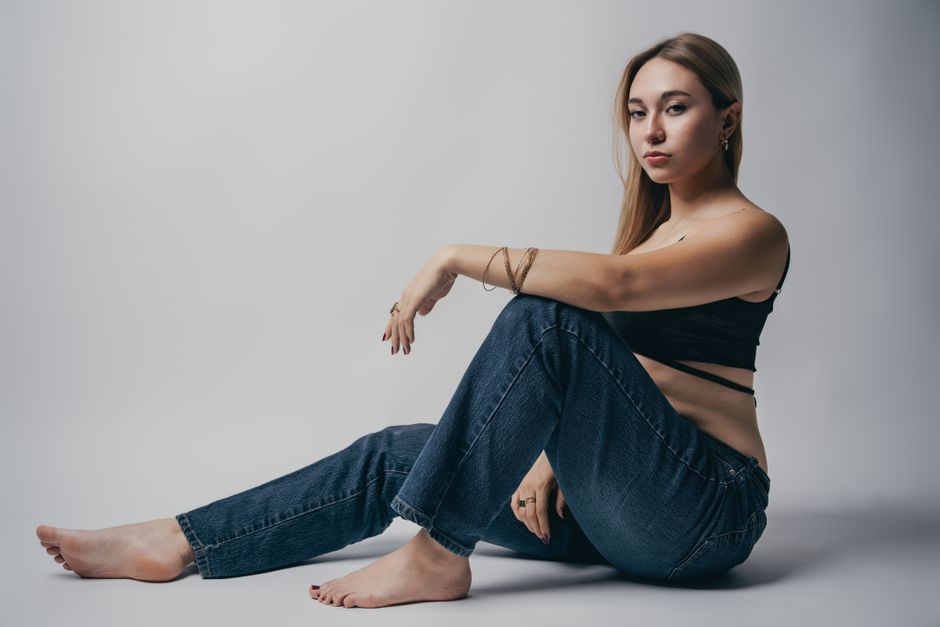
Use the same sequence in a fitting room or at home. It prevents the common mistake of judging jeans only from the front while standing still.
Run this sequence before removing the tags
- Button or zip the jeans without pulling the waistband into place by force.
- Stand naturally and check that the waistband sits level from front to back.
- Insert two fingers inside the waistband. Less than that suggests pressure; much more suggests a gap.
- Turn sideways and inspect the rise. The crotch seam should sit close without cutting into the body or hanging low.
- Sit in a chair for two minutes. Check the back coverage, waistband pressure, and pocket position.
- Walk, climb stairs, and bend. Look for thigh strain, knee restriction, and fabric twisting.
- Place your usual shoes underneath the hem. Check the break instead of judging length barefoot.
- Take a phone photo from the front, side, and back. The camera often reveals pooling or a tilted waistband that a mirror hides.
Write down the deal-breaker
Return the pair if one serious problem remains after you adjust the button and stand normally. Serious problems include a waistband that slides down, a crotch that pinches, pockets that gape, seams that twist, or a hem that drags. Minor stiffness in rigid denim can improve after several wears. A bad rise, bad thigh fit, or wrong length usually cannot.
Best buying rule: judge the jeans in the movements you actually make, then decide. The fitting-room mirror is only one piece of evidence.
Wash, Color, and the Shape You See
Dark wash is the safest everyday choice. It creates a cleaner line, shows fewer high-friction marks, and works with office-casual shirts, sweaters, and jackets. Light wash looks more relaxed because fading draws attention to the hips, thighs, and knees. The cut has not changed, but the contrast makes the body appear more segmented.
Why fading changes perceived fit
Whiskering at the hips and horizontal fading across the thighs can make a snug pair look tighter. Bright areas attract the eye, so heavy fading at the upper leg emphasizes width and movement. If you want the cleanest read of the cut, try an even dark or medium wash first. Use strong fading only after the base fit works.
Match wash to the level of structure you want
Rigid dark denim tends to look sharper and hold a straighter shape. Washed, softened denim looks easier and often feels less formal. Black denim can appear slim and polished, but high-contrast fading may reveal every fold around the hip and knee. Raw or very stiff jeans should not be purchased tight with the hope that they will expand into the right size. They soften; they do not reliably add an entire size of room.
Verdict: choose an even dark or medium wash when you want one pair to handle the most outfits. Choose lighter or heavily faded denim only when you like the extra visual emphasis and the fit already passes every movement test.