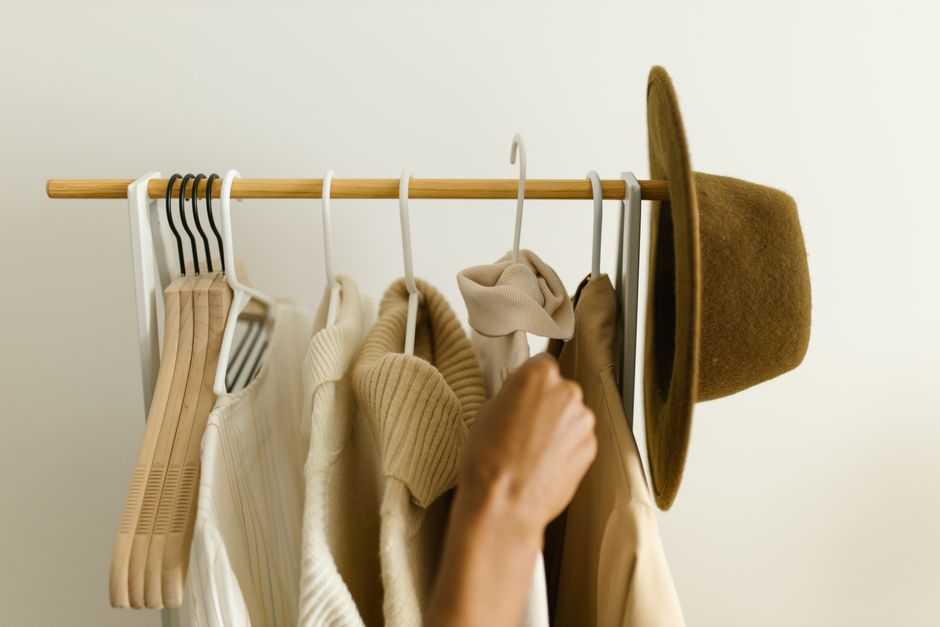
Many people think a small work wardrobe means wearing the same outfit every day. The real problem is poor coordination: too many colors, too many fits, or pieces that only work in one temperature. A better five-piece work wardrobe uses two shirts, two trousers, and one layer, then relies on one suitable pair of shoes to finish every outfit.
What a five-piece work wardrobe actually includes
Start with five clothing pieces, not five complete looks. The most useful setup contains two shirts, two pairs of trousers, and one light layer. Shoes sit outside the count because most people already own a pair that works with several trouser colors. This keeps the shopping list small without pretending that footwear, socks, belts, and outerwear do not exist.
| Piece | Best starting choice | Why it earns space |
|---|---|---|
| Shirt 1 | White or soft ivory button-up | Works with both trousers and under the layer |
| Shirt 2 | Light blue or fine stripe shirt | Adds contrast without creating a new color problem |
| Trouser 1 | Charcoal or dark navy | Handles formal meetings and everyday office wear |
| Trouser 2 | Stone, tan, or medium grey | Makes the same shirts look lighter and less formal |
| Layer | Navy cardigan, overshirt, or fine knit jacket | Changes warmth and gives outfits a third visual level |
Why two shirts and two trousers beat five random pieces
Two tops and two bottoms create four base combinations before the layer or shoe changes anything. That is the first useful multiplication point. A white shirt with charcoal trousers looks formal, while the same shirt with stone trousers feels relaxed. A blue shirt repeats the structure but changes the face of the outfit.
What the shoe must do
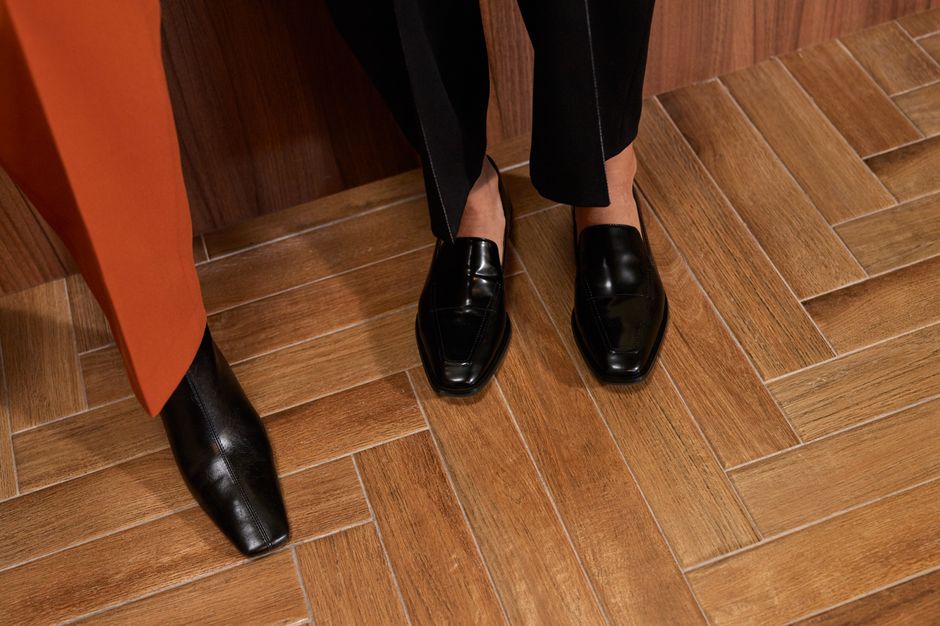
Choose one pair in dark brown, black, or clean white leather based on your office. The shoe should work with both trouser colors and have enough support for a normal commute. A pointed formal shoe may look sharp but fail after eight hours of walking. The best first shoe is the one you can wear on Monday morning and still tolerate on Friday afternoon. The verdict is simple: buy coordinated clothing first, then choose a shoe that supports all four base outfits.
Use the three-color rule before you buy anything
My strongest recommendation is to limit the capsule to three visible colors. Use one dark anchor, one light neutral, and one controlled accent. For example, charcoal trousers are the dark anchor, ivory trousers or a white shirt provide the light neutral, and a pale blue shirt supplies the accent. The layer can repeat the dark anchor or sit between the two in value.
Set the dark anchor
Pick charcoal or navy before you choose anything else. Charcoal looks clean with white, blue, tan, black, and brown. Navy also works well, but navy trousers beside a black shoe can look accidental unless the fabrics have clear contrast. Charcoal gives a first-time capsule more room for error, so it is my preferred anchor for mixed office dress codes.
Choose the light neutral
White, ivory, stone, and light grey make a small wardrobe look larger because they reflect more light and show clear contrast against darker pieces. Stone trousers are easier to wear casually than bright white trousers, which can look too sharp or become difficult to maintain. Choose ivory or light grey for a desk-based office and stone for a wardrobe that needs to handle commuting and lunch outdoors.
Add one accent, then stop
Light blue is the safest accent because it behaves almost like a neutral. A muted olive or burgundy can also work, but do not add both at the same time. The capsule should feel intentional from a distance. If every item introduces a new color, the pieces stop sharing outfits and the five-piece promise disappears. Verdict: one dark anchor, one light neutral, and one soft accent produce more reliable combinations than a larger wardrobe built without a color rule.
Build the five pieces in the right order
Buy in this sequence so each purchase proves its value before the next one arrives. Prices below are typical U.S. list prices and can change by season, sale, or location.
- Buy the dark trouser first. The Everlane The Dream Pant is commonly listed around $88 and uses a four-way stretch fabric with a clean office shape. It is the best choice here for long commutes or seated work because the stretch reduces pulling at the waist and knees.
- Add the light trouser. The Banana Republic Traveler Pant often sits near $120 and comes in neutral shades with stretch. Choose stone or medium grey. Avoid a second dark trouser because it will duplicate the first pair instead of opening new outfit combinations.
- Choose the white shirt. The Uniqlo Oxford Slim Fit Shirt is usually around $39.90 and uses cotton Oxford cloth with enough structure to sit under a cardigan. Select a regular or relaxed cut if your shoulders need more room; a tight shirt will make the whole capsule look less polished.
- Add the blue shirt. A J.Crew Broken-In Shirt, often around $80, gives the capsule a softer second top. Pick pale blue rather than a loud print. A subtle stripe works if the trousers are solid.
- Finish with one layer. The COS Merino Wool Cardigan is often priced around $150. Merino adds warmth without the bulk of a heavy sweatshirt and can sit over both shirts. Navy is the safest shade because it bridges charcoal, stone, white, and blue.
Pick the best shoe for the dress code
For a business-casual office, the Clarks Desert Boot is commonly around $150 and has a crepe sole that feels less rigid than a traditional dress shoe. Choose dark brown suede or leather for the strongest match with charcoal and stone. For a formal office, replace it with a plain black derby. For a casual creative office, the Ecco Soft 7 leather sneaker, often around $160, gives more walking comfort but loses formality.
Check fit before price
Do not force an expensive item into the capsule if the shoulder, rise, or trouser break is wrong. A $40 shirt with clean sleeve length will look better than a $150 shirt that bunches under the arm. My verdict: buy the dark trouser, white shirt, and practical shoe first; add the other two pieces only after those three work together.
How to turn five pieces into ten work outfits
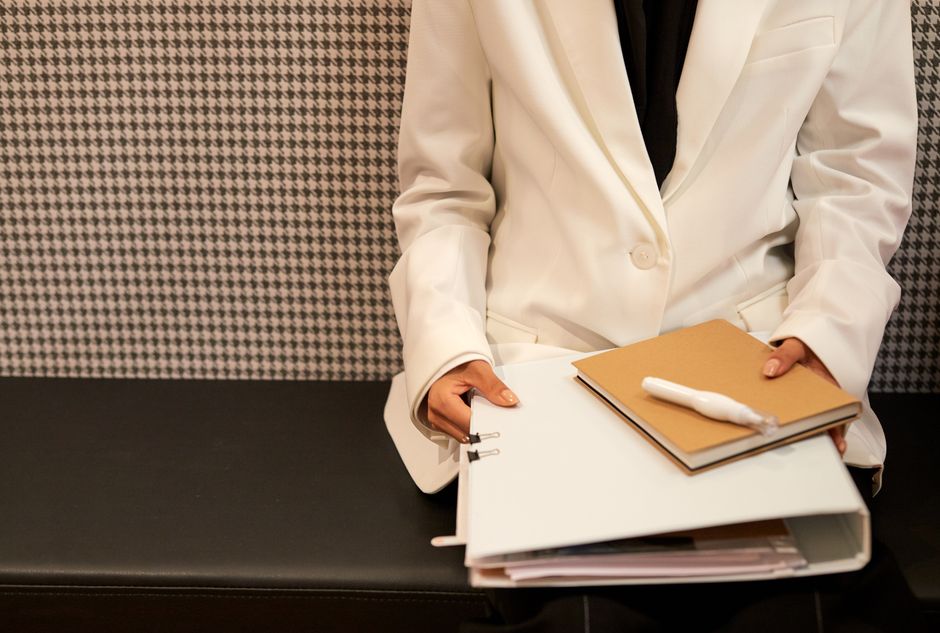
The capsule works because each item has a job at more than one level of formality. Start with four shirt-and-trouser combinations. Then change the layer, tuck, sleeve roll, or shoe finish. These small adjustments matter because an office outfit is read as a whole, not as a shopping list.
Use the four base combinations
| Outfit | Base combination | Best use |
|---|---|---|
| 1 | White shirt plus charcoal trousers | Client meeting or presentation |
| 2 | Blue shirt plus charcoal trousers | Standard office day |
| 3 | White shirt plus stone trousers | Warm day or relaxed Friday |
| 4 | Blue shirt plus stone trousers | Casual office or team lunch |
Wear the COS Merino Wool Cardigan over outfits 2 and 4 when the room is cold. Wear it over outfit 1 for a softer meeting look, but keep the shirt tucked and the cardigan buttoned at the middle buttons. With outfit 3, leave the cardigan open and show the white shirt collar for a lighter finish. The layer creates four more combinations without adding another color.
Change the visual weight, not the whole outfit
A tucked shirt with a belt and dark shoe reads more formal. An untucked shirt with the same trousers looks easier, but only if the shirt hem ends near the middle of the fly rather than below the seat. Rolling sleeves once or twice can work in a relaxed office; three or more rolls usually look messy. The Clarks Desert Boot makes the same clothes feel less corporate than a black derby, while the Ecco Soft 7 makes the outfit more casual still.
Run the Monday-to-Friday rotation
Wear white with charcoal on Monday, blue with stone on Tuesday, white with the cardigan on Wednesday, blue with charcoal on Thursday, and white with stone on Friday. Wash or air the shirts between wears instead of repeating a visibly creased top. The verdict: the outfit count comes from controlled changes in contrast, texture, and formality, not from buying five versions of the same shirt.