

The common misconception is that winter nail care means adding more nail oil. Oil helps, but it cannot replace hand cream, and it cannot repair skin that keeps losing water every time you wash your hands. Cold air, indoor heating, hot water, soap, and hand sanitizer all pull the routine in the same direction: dry, tight skin, cracked cuticles, peeling nails, and painful hangnails.
Why winter makes hands and nails crack
Cold air weakens the skin barrier
Winter air usually holds less moisture than warm air. Indoor heating lowers humidity again. Your skin responds by losing water from its outer layer faster than it can replace it. The hands suffer first because they face frequent washing, cleaning products, wind, and friction, yet they contain fewer oil glands than areas such as the face or scalp.
The result is not just a cosmetic problem. A damaged skin barrier develops tiny gaps. Those gaps let water escape and give soap, fragrance, and cleaning chemicals more chances to sting. Once the skin becomes rough, people often wash harder or use hot water to feel clean. That creates another round of dryness.
Cuticles protect the nail root
The thin strip of dead skin attached to the nail plate is the cuticle. The living skin behind it is the proximal nail fold, and it protects the nail matrix where new nail cells form. Cutting or tearing that area can create an opening for irritation and infection. A tidy manicure should soften and gently push back loose cuticle tissue, not remove every visible edge.
The first principle is simple: winter nail care works by slowing water loss and protecting the nail root. Hand cream covers the larger problem. Cuticle oil adds flexibility to the small, easily missed area around each nail. Neither product works well if the routine keeps damaging the skin.
How to choose a hand cream for winter
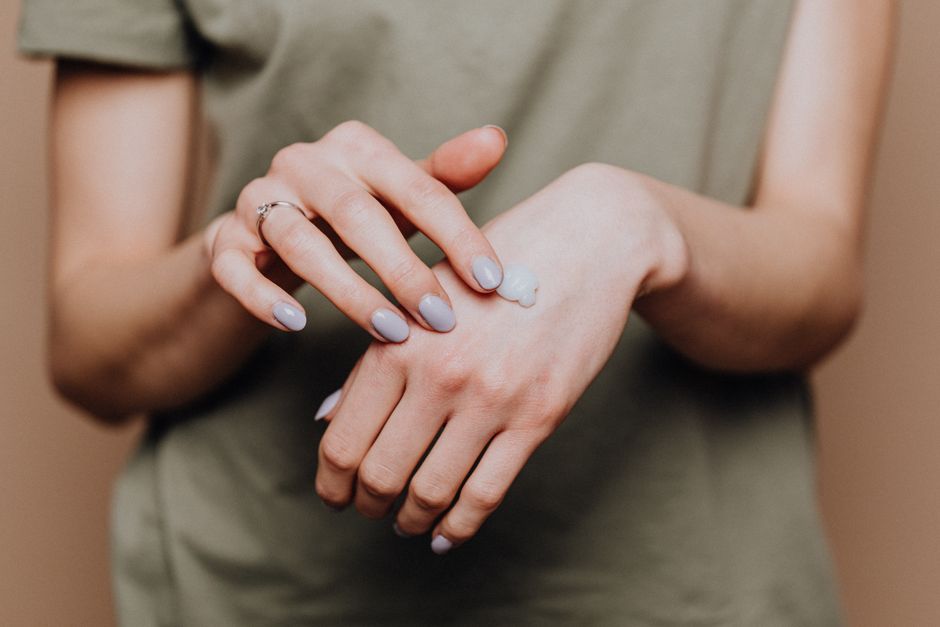
Look for three types of ingredients
A useful winter hand cream normally combines a humectant, an emollient, and an occlusive. Humectants such as glycerin attract water into the outer skin layer. Emollients smooth rough gaps between skin cells. Occlusives such as petrolatum, mineral oil, or waxes slow water loss by leaving a protective film.
Do not judge a cream by a long ingredient list or a luxury scent. A plain formula with glycerin and petrolatum can outperform a heavily fragranced lotion on cracked hands. Fragrance is not automatically harmful, but it can sting fissures and irritate people with eczema-prone skin. For painful cracks, fragrance-free is the safer starting point.
Match the texture to the problem
Use a light lotion during the day if you need to type, drive, or handle clothes immediately after applying it. Choose a thicker cream after handwashing and before bed. A balm or ointment suits splits around the knuckles and nail folds, but it can feel greasy and may leave marks on fabrics.
| Skin problem | Best texture | What to look for |
|---|---|---|
| Tight skin after washing | Medium cream | Glycerin, ceramides, shea butter |
| Rough, flaky hands | Rich cream | Glycerin plus emollient oils or fatty alcohols |
| Cracks around knuckles | Balm or ointment | Petrolatum, dimethicone, waxes |
| Stinging or eczema-prone skin | Fragrance-free cream | Short ingredient list and no added scent |
My clear buying rule is to choose the richest texture you can use consistently. A perfect cream left in a drawer does nothing. Keep one tube beside the sink and another near the bed.
How to repair dry cuticles without making them worse
Follow a five-step evening routine
- Wash with lukewarm water. Hot water feels comforting, but it strips more protective oil from the skin.
- Pat, do not scrub. Leave a small amount of dampness on the hands instead of rubbing them completely dry.
- Apply hand cream within three minutes. This traps some of the water left on the skin.
- Press one drop of cuticle oil onto each nail. Massage it over the sidewalls, the cuticle, and the skin beneath the free edge.
- Seal severe cracks with a thin balm. Use it only on the damaged spots if a full layer feels uncomfortable.
This routine takes less than two minutes. The timing matters more than the amount. Reapplying a small amount after every few washes usually works better than using a large amount once at night.
Push back only softened, loose tissue
Never push dry cuticles immediately after washing your hands. Soften them first with cream or oil, then use a clean, rounded orangewood stick with almost no pressure. Stop when the tissue resists. The goal is to tidy the nail plate, not to expose a sharp crescent of tender skin.
Hangnails need a different approach. Do not bite or pull them. Wash your hands, disinfect small nail scissors, clip the loose piece close to the skin, and apply cream. If the area becomes hot, swollen, increasingly painful, or produces pus, stop home treatment and seek medical advice.
Best hand creams and cuticle products for winter in 2026

Five products with different strengths
Prices below are typical U.S. retail figures in 2026 and can change with size, retailer, and sales. These are not five versions of the same product. Each one suits a different problem, so the best pick comes from the type of damage you need to control.
| Product | Size and typical price | Best use | Verdict |
|---|---|---|---|
| O’Keeffe’s Working Hands | 3.4 oz jar, about $8–$10 | Very dry, rough hands | Best budget choice for thick, cracked skin |
| Eucerin Advanced Repair Hand Cream | 2.7–2.8 oz tube, about $6–$9 | Daily dryness and rough texture | Best everyday fragrance-free option |
| La Roche-Posay Cicaplast Hand Cream | 2.6 oz tube, about $12.99 | Damaged, easily irritated hands | Best for a protective, non-perfumed barrier cream |
| Burt’s Bees Almond & Milk Hand Cream | 2.6 oz tube, about $9–$12 | Comfortable daytime use | Best scented-feel pick, but not my first choice for splits |
| CND SolarOil | 0.25 oz bottle, about $9–$13 | Cuticles and nail flexibility | Best dedicated cuticle oil |
Choose one clear winner for your problem
For deep dryness on a budget, O’Keeffe’s Working Hands is the strongest pick because its dense texture stays on rough areas longer than a thin lotion. For daily use at a desk or in a bag, Eucerin Advanced Repair is easier to spread and gives you a better balance of protection and comfort. For skin that stings easily, La Roche-Posay Cicaplast Hand Cream earns the higher price because it focuses on damaged hands without a strong fragrance.
CND SolarOil wins for cuticles, but it should not replace hand cream. Oil softens and conditions the nail fold; it does not provide the same water-binding and barrier support as a cream. Use the two together when the skin around the nails keeps splitting.
Winter nail care mistakes that keep the damage going
Mistake one: cutting the entire cuticle
Removing the whole cuticle can make a manicure look polished for a few days, but it also removes part of the seal at the base of the nail. The skin may grow back ragged, and small cuts can become sore after washing. Trim only a loose hangnail or a clearly detached piece of dead skin. Leave the attached cuticle alone.
Mistakes two through six
- Using very hot water: Switch to lukewarm water and shorten the wash when possible.
- Applying cream only when the skin hurts: Add a small amount after washing so dryness does not reach the cracking stage.
- Picking peeling nails: Clip a snag with clean clippers and file the edge in one direction. Pulling can lift more nail layers.
- Using acetone too often: Acetone removes polish efficiently, but repeated full-nail exposure can leave nails brittle. Apply oil after removal and reserve gel removal for careful, limited sessions.
- Ignoring wet work: Rubber-lined gloves protect better than thin disposable gloves when washing dishes or cleaning. Dry the inside of the gloves between uses.
Another common error is switching products every few days. Give a basic routine at least two weeks unless a product causes burning, rash, or swelling. Improvement should show as less tightness and fewer new splits, not instant perfection.
If redness spreads, pain increases, or the skin develops pus, home nail care is no longer the right answer. Cracks can become infected, and people with diabetes or poor circulation should take hand wounds seriously.
Hand cream, cuticle oil, or balm: which one do you need?

Is an expensive hand cream better?
No. Price can reflect packaging, scent, or a brand’s distribution costs rather than stronger skin protection. A $7 fragrance-free cream with glycerin and petrolatum can beat a $30 perfumed formula on cracked hands. Pay more only for a texture you will use often, a formula your sensitive skin tolerates, or a product that solves a problem cheaper lotions have not handled.
Can cuticle oil replace hand cream?
No. Cuticle oil works on a narrow area and mainly improves flexibility. Hand cream treats the broader skin barrier across the palms, fingers, and knuckles. Use oil alone for a quick manicure touch-up when the surrounding skin feels comfortable. Add cream when the hands feel tight, rough, or itchy.
Why do nails peel even after moisturizing?
Moisture cannot correct every cause of peeling. Repeated soaking and drying, aggressive buffing, peeling off gel polish, and using nails as tools can split the layers. Keep nails short for several weeks, wear gloves for wet work, stop buffing the surface, and remove polish without scraping. If peeling continues across many nails or comes with color changes and pain, arrange a medical check rather than adding more products.
The best alternative to buying another treatment is often reducing the source of damage. A protective glove, a gentler remover, and a short nail shape can save more trouble than a shelf full of oils.
A simple winter routine with a clear product recommendation
Use this schedule for seven days
| Time | Action | Amount |
|---|---|---|
| After each handwash | Apply hand cream to palms, backs of hands, fingers, and nail folds | Pea-sized amount per hand |
| After wet chores | Dry carefully, then apply a richer cream | Enough to remove tightness |
| Before bed | Massage cuticle oil into each nail, then apply hand cream | One drop per hand or as needed |
| Twice weekly | Clip hangnails and file snags; do not cut attached cuticle | Five minutes |
The final verdict
For most people with dry winter hands and rough cuticles, Eucerin Advanced Repair Hand Cream plus CND SolarOil is the best starting combination. Eucerin gives the hands a practical, fragrance-free daily cream at a low price, while SolarOil targets the nail folds without pretending to replace a barrier cream.
Choose O’Keeffe’s Working Hands instead if your knuckles already split or the skin feels thick and painfully rough. Choose La Roche-Posay Cicaplast Hand Cream if ordinary lotions sting or your hands need a more protective finish. Keep the nails short, stop cutting attached cuticles, and apply cream before the skin reaches the cracking stage. That routine will do more for winter nail health than a complicated manicure schedule.